
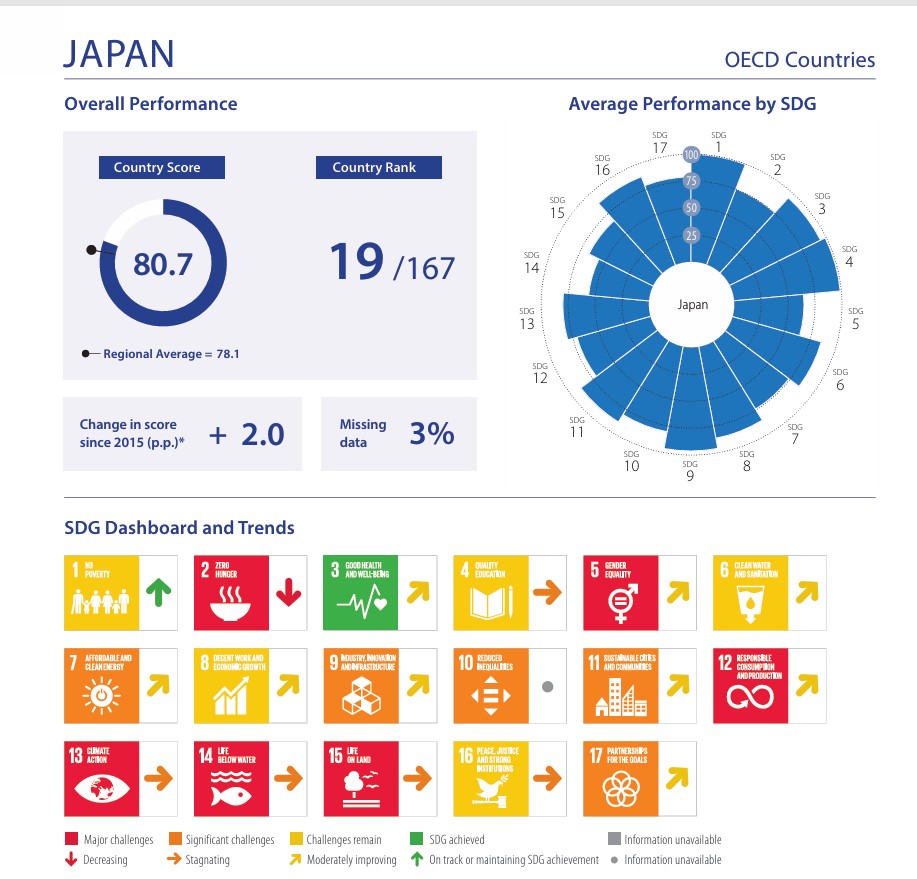
In 2026, there are now just over four years left until 2030, the target year for achieving the SDGs. So how much progress has been made? According to the “Sustainable Development Report 2025” published in June 2025 by SDSN※ (Sustainable Development Solutions Network), Japan ranked 19th out of 167 countries in SDG achievement. This report evaluates whether a nation’s economic prosperity is not only substantial, but also built in harmony with the environment and society. This is because even if short-term profits are high, long-term corporate value may be undermined if there are environmental burdens or human rights issues. Likewise, we are now in an era where it is not enough for a country to be economically prosperous; it is being asked whether that prosperity is built in harmony with the environment and society.
The SDSN 2025 report lists each country’s progress based on publicly available information. Below is a summary of the areas where Japan scores highly and where it scores poorly.
| Areas with high ratings | Key grounds |
|---|---|
| SDG 3: Good Health and Well-Being | Life expectancy of 84.7 years and neonatal mortality rate of 0.8—among the highest levels in the world |
| SDG 4: Quality Education | PISA score of 532.7 and literacy rate close to 100% |
| SDG 9: Industry, Innovation and Infrastructure | R spending at 3.4% of GDP and one of the world’s highest numbers of patent applications |
| SDG 16: Peace, Justice and Strong Institutions | Extremely low homicide rate of 0.2 per 100,000 people |
| SDG 6: Clean Water and Sanitation | Safe drinking water and sanitation services available to almost the entire population |
| Areas needing improvement | Key grounds |
|---|---|
| SDG 2: Zero Hunger | Slow transition to sustainable food production and a high Human Trophic Level (HTL) |
| SDG 5: Gender Equality | Women make up 15.7% of members of parliament; gender pay gap of 22.0% |
| SDG 12: Responsible Consumption and Production | High environmental burden associated with imports |
| SDG 13: Climate Action | High CO₂ emissions and a low share of renewable energy |
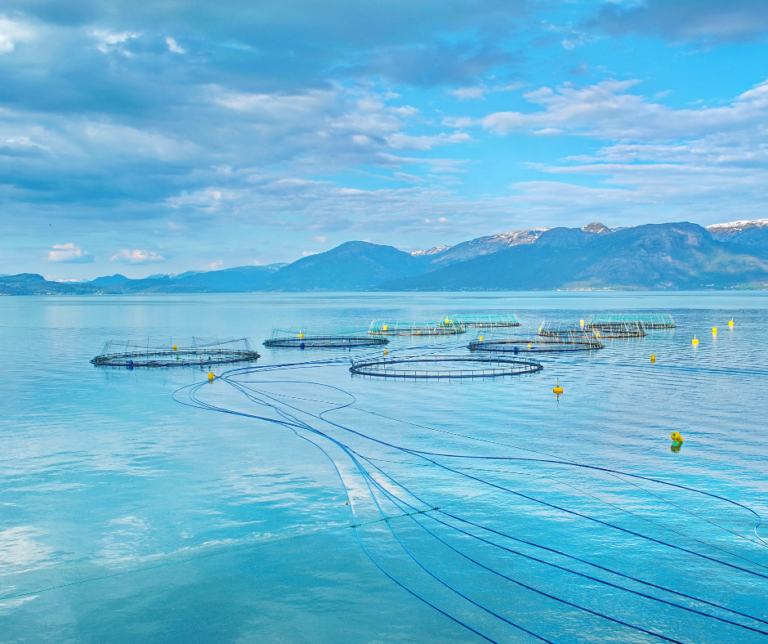
| SDG 14: Life Below Water | 60.9% of fish stocks are overfished or depleted |
| SDG 15: Life on Land | Deforestation and biodiversity impacts driven by imports |
The above shows that while Japan has achieved strong results in areas such as health, education, and public safety, it still faces major challenges in its food system and environmental impacts. What was particularly surprising was that SDG 2, “Zero Hunger,” was still assessed as an area of concern.
In Japan, hunger due to food shortages is rarely seen. Convenience stores and supermarkets are always stocked, and the food supply is stable. For that reason, many people may think, “Japan has achieved SDG 2.”
However, “Zero Hunger” in the SDGs is not a goal that simply asks whether there is enough food. What matters as a key evaluation point is whether food is produced in a sustainable way.
In this report, one of Japan’s challenges is identified as its high “Human Trophic Level.” This is an indicator of the proportion of animal-based foods in the diet. The more consumption of meat, eggs, dairy products, and the like increases, the more feed, land, and water resources required for their production also increase.
In addition, Japan’s livestock industry is highly dependent on imported feed, using large quantities of Brazilian soybeans and U.S. corn, among others. As a result, although it is difficult to see within Japan, it can be said that Japan is complicit in deforestation and biodiversity loss in the producing regions.
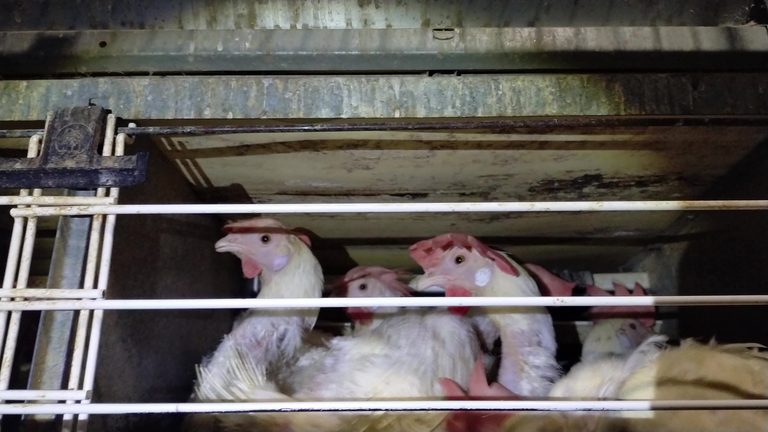
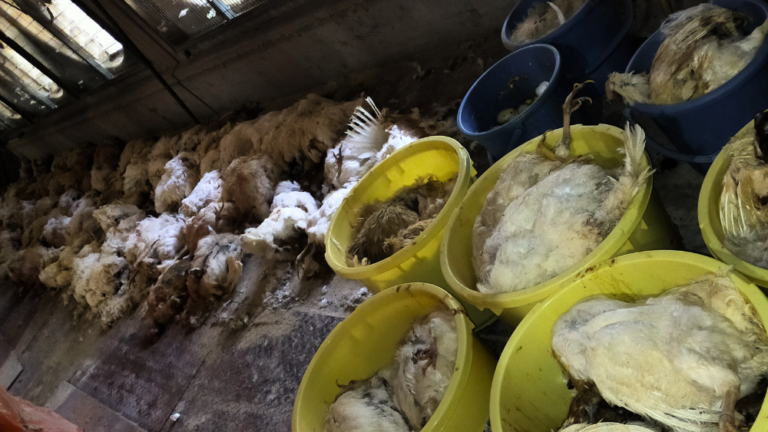
This perspective is also deeply connected to the animal welfare issues that Animal Rights Center works on. Today’s intensive livestock systems are linked not only to animal welfare problems, but also to a range of environmental issues, including deforestation and biodiversity loss associated with feed production, and greenhouse gas emissions.
In recent years, there has been a growing global movement to position animal welfare as an essential element of a sustainable food system. Companies and investors have also begun to view the living conditions of farmed animals as ESG and sustainability issues. In Japan, efforts such as cage-free eggs and stall-free pork are beginning to move forward, but as you know, compared with international standards there is still significant room for improvement.
With less than five years remaining until the SDGs deadline, we need to adopt a perspective that goes beyond simply “securing enough food” and asks “what kind of food production do we choose?” This report once again shows that improving animal welfare is not only for animals, but also contributes to environmental conservation and the realization of a sustainable food system.
From the perspective of the SDGs, improving the welfare of farmed animals is no longer merely an ethical issue. It is deeply connected to the environment, biodiversity, and the sustainability of the food system—in other words, it is a critical human issue. Rather than thinking, “We’re a country without hunger, so we’re fine,” we need to reframe the SDGs through the lens of “how our food is produced.” There is no time until 2030. Please support the work of Animal Rights Center in advancing animal welfare, a key piece in achieving the SDGs.
※What is SDSN?
SDSN (Sustainable Development Solutions Network) is an international research and policy network established in 2012 at the call of the UN Secretary-General. Universities, research institutions, and experts from around the world participate, providing policy recommendations and evaluations toward achieving the Sustainable Development Goals (SDGs). The organization views sustainable development as a comprehensive challenge that includes not only environmental issues, but also the economy, society, and governance. For this reason, the “Sustainable Development Report” evaluates not only economic indicators such as GDP growth and income, but also non-financial factors such as health, education, gender equality, climate change, and biodiversity.
Since the SDGs were adopted at the United Nations in 2015, SDSN has published the “Sustainable Development Report” every year, analyzing each country’s progress toward achieving the SDGs. This report is regarded as one of the leading reports that compares and evaluates SDG progress based on objective data, and is used by governments, companies, research institutions, and citizens