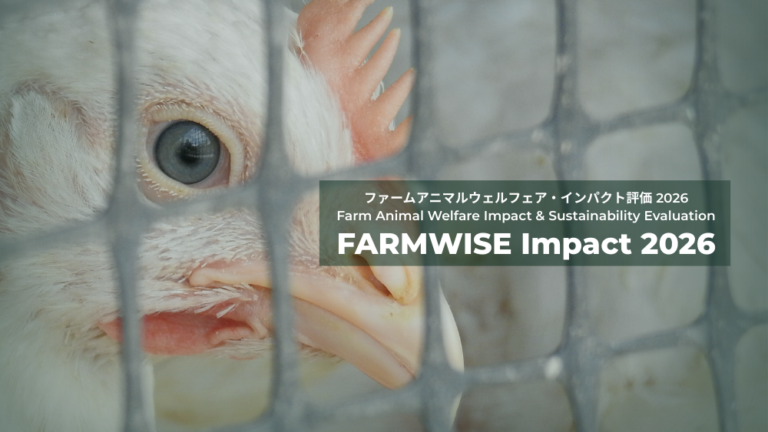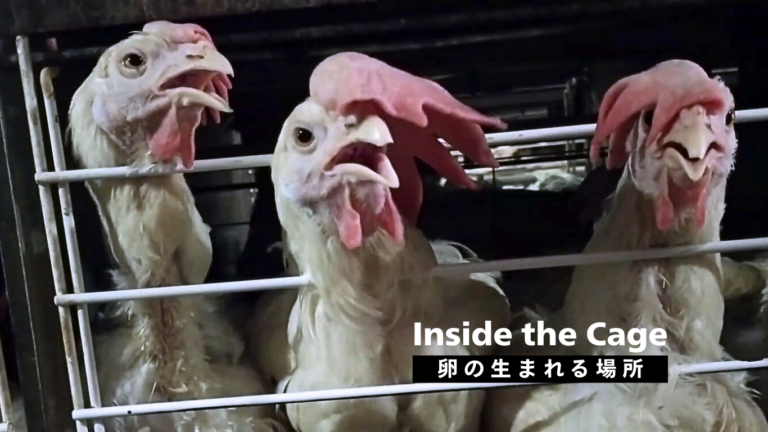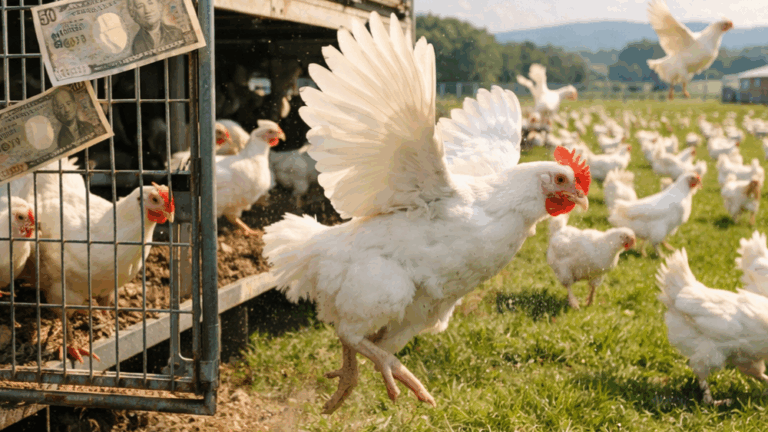


Domestic cage-free chicken numbers increase but still lowest in the world at 1.48%
Faster shift to animal welfare livestock production needed
Cage-free egg rearing, which emphasizes animal welfare, is spreading rapidly around the world, and many food companies and retail chains, not only in Europe and the United States but also in South America and Asia, have set a goal of switching to cage-free eggs by 2025 to 2030. Japan has lagged behind this trend, partly because the exact number of egg-laying hens raised cage-free is not publicly known, making it difficult for companies to be sure of procurement prospects and producers to be sure of demand.
In 2023, we will conduct Japan’s first survey on the actual number of cage-free egg-laying hens, and this is the second such survey, revealing the latest actual situation. This survey is intended to provide basic data for the establishment of a sustainable egg supply system in the future.
In addition, this issue includes a summary of the global situation of animal welfare, the situation in Japan, and comments from producers. The situation of animal welfare has been changing significantly in Japan over the years, and this report can be used to understand where we are now.
▼Cage Free Feather Count Survey 2025 Report
The percentage of chickens kept cage-free in Japan was 1.48%, an increase of 0.38% since it was 1.1% at the time of the 2023 survey. However, this percentage is based on the assumption that there is a margin of error because the total number of chickens kept in 2023 was 7,562,000 more than the current level.
The number of chickens currently kept cage-free was 1,924,435.
We also asked about plans to increase the number of cage-free chickens and counted those with concrete plans. The results show that a total of 330,295 hens will be added (assumed). The timing is not yet determined, as some farms responded this year and others responded within the next four years, but adding up these numbers, 1.738% of the farms will be cage-free.
Leading the cage-free bird count was the Aviary system, which was adopted by nine farms; the nine farms accounted for 29.17% of the total. However, there are now many more general heifer farms keeping more than 10,000 birds, and a large number of large-scale heifer farms, not limited to Aviary systems, are now in existence. It is clear that in order to move the percentage of cage-free eggs in the country to world-class levels in the future, farms with large-scale expansion will be needed. On the other hand, there are many farmers who value quality over quantity, with some considering a switch from flat-raising to pasture-raising and others deciding not to increase the number of hens for their health. The existence of diverse directions is a good trend, given that while the need for the number of cage-free eggs is being met, there is also likely to be an increase in consumer demand for eggs with higher animal welfare.
Comments from the Animal Rights Center
This study visualizes that animal welfare remains slow to respond. It is clear that the level of animal welfare is the lowest among OECD member countries, considering the significant increase in the number of cage-free animals, including those in neighboring countries.
The 1.48% cage-free chicken flock is far from enough to meet the future switching needs of these companies, or even the needs that are currently apparent.
We are in discussions with over 200 food companies and know that the movement toward cage-free is steadily increasing. We also know that these companies are considering the prospects and stability of the supply of cage-free eggs as a challenge. We hope that the companies that are sourcing egg products to meet this challenge will make their needs known to the public. As companies around the world are doing, it is imperative that they make the commitment to switch to cage-free eggs in the future. Many producers will respond well to that need. And in the current difficult situation in Japan, where animal welfare has not progressed well, connecting with producers who can solve social issues together means that companies will have a good partner with whom they can have a long-lasting relationship. This is something worthwhile, isn’t it?
Cage Free Feather Count Survey 2025 Results: excerpts from the report
| Number of surveys mailed | 916 |
| Number of additional contacts not by mail | 873 |
| Number of flat-feeding feather count data acquired | 298 |
*Number of data obtained does not include closed businesses or no response.
Actual number and percentage of cage-free feathers
| Current feather count | 1,924,435 | 1,924,435 |
| Number of feathers to be increased | – | 330,295 |
| total amount | 1,924,435 | 2,254,730 |
| Overall feather count Livestock Production Statistics from 2024 data | 129,729,000 | 129,729,000 |
| ratio | 1.483% | 1.738% |
Number of birds and farms by type of stocking
| number of birds | Number of farms | |||
| Barn | 1,335,261 | 69.38% | 258 | 85.15% |
| Aviary | 561,400 | 29.17% | 9 | 2.97% |
| Free-range | 27,774 | 1.44% | 36 | 11.88% |
There were 5 farms that had more than one type of stocking (e.g., flat and pasture).
Number of birds planned to be increased by type of stocking
| Barn | 216,520 |
| Aviary | 104,000 |
| Free-range | 10,195 |
| total amount | 330,715 |
Survey period: June 1 – October 12, 2025
Survey method: Questionnaires were mailed, and farms that did not respond were telephoned and interviewed orally. In cases where data could not be obtained due to dropped calls or refusal to answer, primary information was collected from reliable public data (either from their own media (including SNS) or public information in the industry and mass media (limited to those available after September 2023)).
Issues to be considered: 31 farms are known to have cage-free chicken flocks, but there are 31 farms with no communication or refusal to respond and no reliable public information, which is a minimum value that needs to be taken into account.