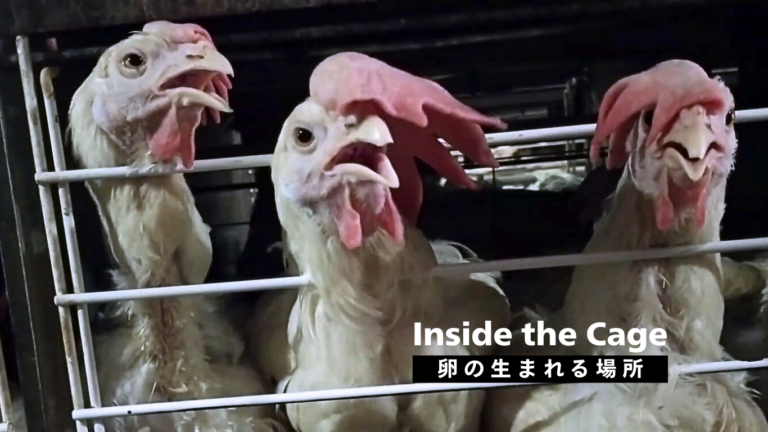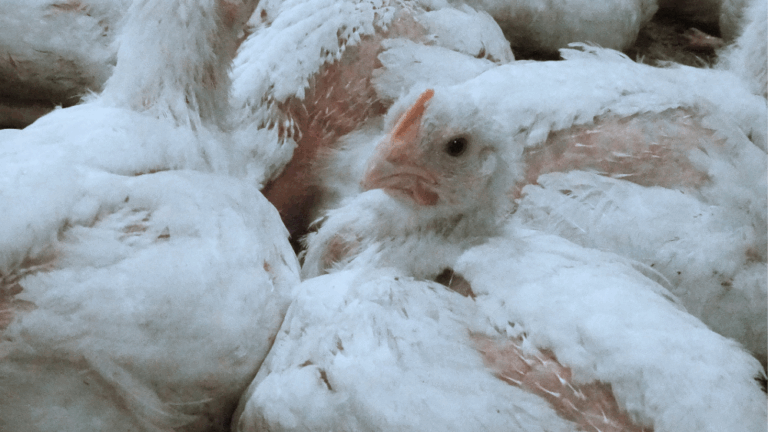

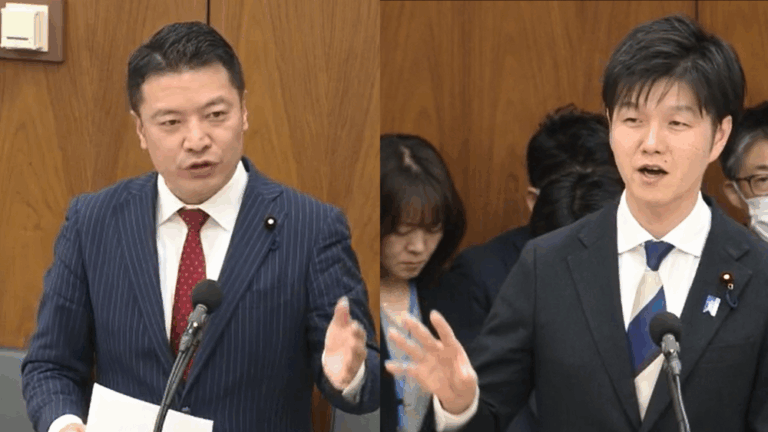
Slaughter without stun treatment, only in Japan, is here to stay. Chickens have been suffering for more than 50 years without a voice, and on December 18, 2025, at the House of Representatives Committee on Agriculture, Forestry, and Fisheries, Representative Katsuhiko Yamada asked about this issue and the need for ambitious goals to improve animal welfare.
Introduction of stanning equipment for intensive agricultural structural transformation measures
Councilor Yamada said that neck cutting without stunting is a major humane problem, is not allowed in the international community, and is a violation of the Animal Protection Law, and asked for support for the introduction of stanning. In response, Minister Suzuki of Agriculture, Forestry, and Fisheries,
Taking advantage of the opportunity provided by the Intensive Agricultural Structural Transformation Measures for the five-year period from FY2025 to FY 2011, we have newly established a menu in the FY2025 supplementary budget that focuses on the development of poultry slaughtering facilities. The project is an advanced model poultry slaughtering facility development project to support the introduction of stanning equipment, etc. The project provides for a maximum subsidy of up to 2/3 in accordance with the local government’s share of the cost.
He explained.
The inclusion of animal welfare-oriented stunting of poultry is a major turning point in the intensive agricultural structural transformation measures to be implemented through March 2030. It is a turning point because the target year can also be seen as an indication: what has remained unchanged for 50 years is about to change. What has not changed in 50 years is about to change because we, the citizens, spoke up, and politicians who recognized the legitimacy of our arguments spoke up.
This will be a support to CAS (air-controlled stun treatment), as it is an advanced model poultry slaughter facility that is animal welfare compliant. The world is in the process of switching to CAS right now, and for Japanese livestock production, the poultry slaughter process may be the first to catch up with the rest of the world, rather than on-farm handling.
However, there are 1,400 poultry slaughterhouses, including very small-scale slaughterhouses and above. The first urgent need for support is for the 136 large-scale poultry slaughterhouses, where a large number of chickens are slaughtered. However, the remaining very small-scale poultry slaughterhouses (those slaughtering less than 300,000 birds per year) include local chickens and ducks, and it is hoped that subsidies for these facilities will also be provided during this five-year period.
Goal setting is coming soon.
Next, Councilor Yamada called for a numerical (annual) goal to improve animal welfare from the perspective of ESG investment.
In order for food companies to obtain this ESG investment, they are required to create an environment where they can procure eggs and meat from rearing methods such as gauge-free and gestation stall-free. The Ministry of Agriculture, Forestry and Fisheries’ Animal Welfare Animal Feeding and Management Guidelines provide direction, but currently lack a target year for achieving this and a concrete transition plan. As in the case of the Green Food System Law, the goal is to increase the area of organic farming to one-fourth by 2050, and ambitious numerical targets are needed to make progress. So I would like to see a firm numerical target for animal welfare as well.
In response, Minister Suzuki replied that he is currently in the process of setting a target year for achieving the items in the animal welfare management guidelines.
However, the goals currently being pursued are only the “recommended implementation items” in the guidelines, and the “recommended future implementation items” necessary to obtain ESG investments have not been addressed. The “recommended items for future implementation,” which are necessary to obtain ESG investments, have not been addressed.” The “items recommended for future implementation” include pregnancy stall-free and cage-free. These are the ones that need targets and should be initiated soon after the current study.
Finally, Minister of Agriculture, Forestry and Fisheries Suzuki
For example, if you go to a supermarket in New York in the United States, you can see on the shelves the level of consideration given to animal welfare. The cost of animal welfare is naturally higher for the production site, so the market must be such that the consumers will accept it.
He added.
There is no doubt that there are issues to be addressed in consumer education, sales methods, and labeling. It would be very encouraging if the Ministry of Agriculture, Forestry and Fisheries would join us in taking total measures to address the distribution and retail of livestock products.
The voices of citizens and politicians are needed for the country to work.
I hope you will read this article and join me in raising even more voices, opinions, and actions in the future!
Full text of the Agriculture, Forestry and Fisheries Committee question
Councilor Yamada: This is about animal welfare. Please see reference 4. There is a very serious humane problem with Japan’s method of slaughtering birds. Neck-cutting without stunning is unacceptable in the international community. About 700,000 birds are put alive into boiling water every year in Japan. Slaughtering without the stunning process, known as stunning, clearly causes severe suffering and pain to the animals and is a clear violation of the Animal Welfare Management Law.
I believe that we should actively support plants that introduce the stanning process, which is an international standard.
Minister of Agriculture, Forestry and Fisheries Suzuki: Thank you for your question. First of all, poultry slaughtering is conducted in accordance with the public notice set forth by the Ministry of the Environment based on Article 40, Paragraph 2 of the Animal Welfare and Management Act, which is under the jurisdiction of the Ministry of the Environment. However, the Ministry of Agriculture, Forestry and Fisheries has been providing support for the introduction of stanning facilities through the Comprehensive Support Grant for Creating a Strong Agriculture Industry. The normal subsidy rate is one-third, but if the equipment is used for animal welfare, the rate will be raised to one-half. Furthermore, taking advantage of the opportunity of the five-year intensive measures for the transformation of agricultural structure, we have newly established a special menu for the improvement of poultry slaughtering facilities in the supplementary budget for fiscal 2025. The project is designed to support the introduction of stanning equipment, etc., and the maximum subsidy of up to 2/3 of the project is available, depending on the ratio of the local government’s share. The government will continue to encourage the introduction of stanning facilities by making full use of this project, while obtaining the understanding of business operators.
Councilor Yamada: Thank you very much. I am pleased to hear that considerable progress has already been made, and I would like to continue to appeal for the enhancement of animal welfare support in this way. Please see Document 4.
ESG InvestmentsInvestments that emphasize environmental and social governance, animal welfare is rapidly gaining attention as an important evaluation factor for social or environmental biodiversity. In order to obtain this ESG investment, food companies are required to create an environment that allows them to source eggs and meat from rearing methods such as gauge-free and gestation stall-free. The Ministry of Agriculture, Forestry, and Fisheries’ Animal Welfare Animal Feeding and Management Guidelines provide direction, but currently lack a target year for achieving this goal and a concrete transition plan. As in the case of the Green Food System Law, the goal is to increase the area of organic farming to one-fourth by 2050, and with ambitious numerical targets, more and more efforts will be made. So, I would like to see a firm numerical target for animal welfare as well.
Minister of Agriculture, Forestry and Fisheries Suzuki:Thank you for your question. For this reason, in July 2023, the Ministry of Agriculture, Forestry and Fisheries (MAFF) issued guidelines for animal husbandry and management regarding animal welfare in line with international standards, and has been vigorously promoting awareness of these guidelines among all concerned. We have been conducting periodic surveys to check the progress of efforts to implement these guidelines at production sites, and we recently compiled the results of these surveys and published them on June 27.
As the next step, we have just started to examine the possibility of setting appropriate target years for each of the items in the guidelines, and we will continue to promote the spread and establishment of animal welfare-conscious animal husbandry and management.
I would like to add something else. If you go to supermarkets in New York, for example, you can see on the shelves of the supermarkets the level of animal welfare awareness of the products. The cost of animal welfare is naturally higher for the production site, so the market must be such that the consumers accept it as well. I hope that we can work together in this regard.
Mr. Yamada: Thank you very much for the strong message from the Minister, and I hope that you will consider numerical targets as the next step. My last question is: free-ranging of livestock animals has value not only in improving animal welfare.