
— The Next Step in ESG Management, Informed by Dialogue with Hokuryo
In recent years, alongside climate change and human rights, animal welfare has also attracted growing international attention as a corporate sustainability issue.
In Europe and the United States, not only retailers and food manufacturers but also investors are treating animal welfare as an issue tied to medium- to long-term corporate value and are advancing engagement with companies. In Japan, however, such momentum remains limited.
In 2026, SIFT Japan (Sustainable Investment in Food-System Transition) submitted a shareholder proposal to Hokuryo, a major egg producer, calling for animal welfare and the transition to cage-free systems to be positioned as part of its management strategy.
The proposal was rejected with 2.16% in favor. However, through a series of dialogues, the current state of animal welfare management in Japanese companies became clearer.
For the first time, it became a management-level discussion as an ESG issue
In this shareholder proposal, the discussion focused not on “hen welfare,” but on “corporate value,” “profit structure,” and “disclosure.” Behind this lies structural challenges facing Japan’s egg industry.
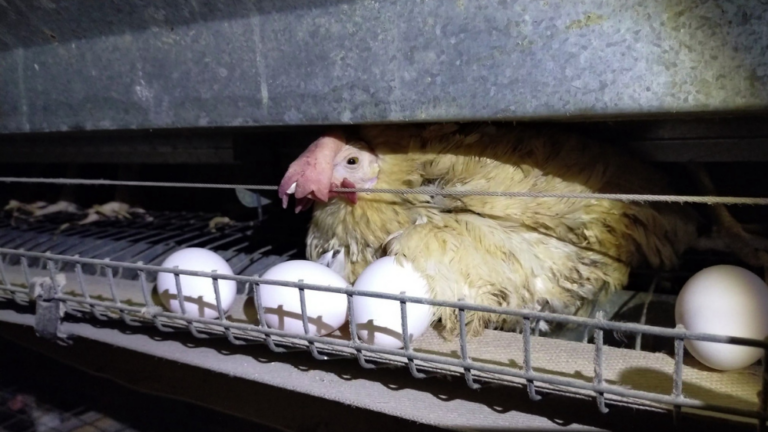
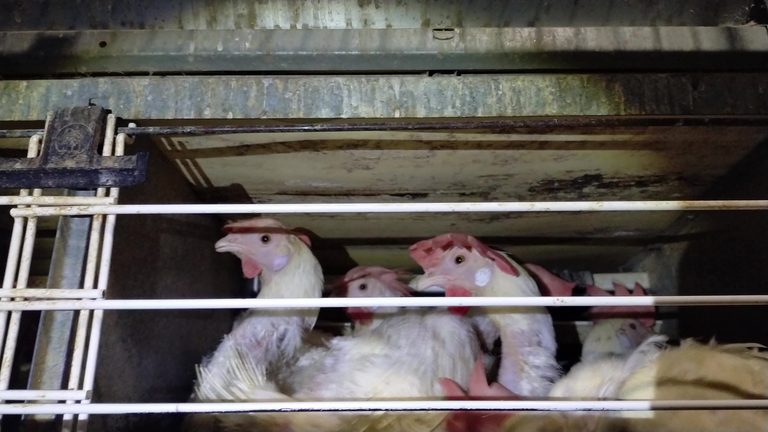
Conventional caged eggs are a commodity product heavily influenced by market prices, and prices fluctuate sharply due to supply-demand changes caused by avian influenza, extreme heat, and other factors.
By contrast, cage-free eggs can be priced based on added value, including brand and quality, leaving greater room for producers to be involved in price-setting. This is also emphasized in Hokuryo’s securities reports and other disclosures, and it is clear that cage-free eggs contribute to stabilizing poultry management.
Animal welfare is an ethical issue, but it is also linked to business portfolio and pricing power, and can be viewed as a factor that supports management stability.
Challenges Identified at the Shareholders’ Meeting
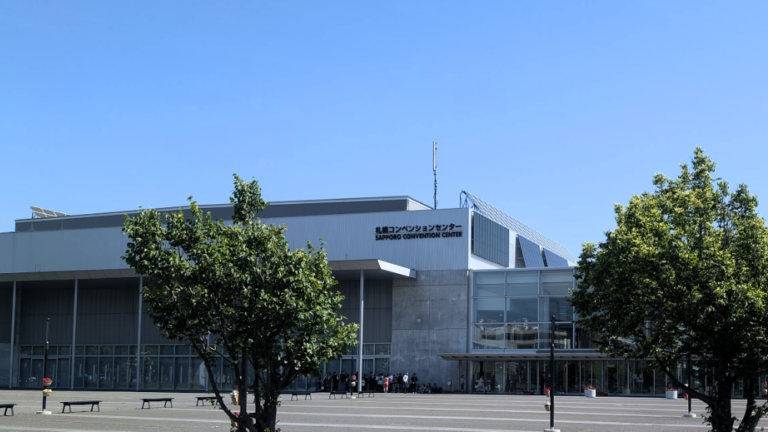
At the general meeting of shareholders, the proponent was given approximately three minutes to explain the proposal.
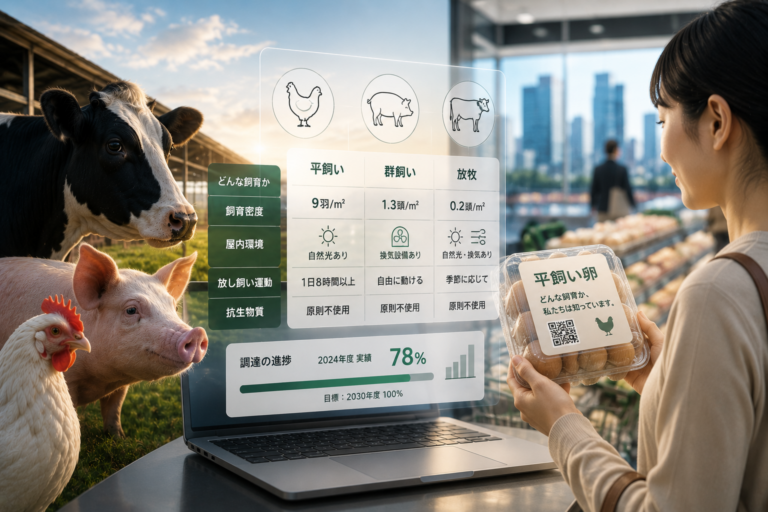
After that, the first question from an individual shareholder, in relation to the proposal, was: “I have never seen free-range eggs,” and “What proportion is currently cage-free?” The company explained that the current free-range ratio is about 3–5% and indicated its intention to continue expanding it.
In addition, the proponent asked questions not about animal welfare itself, but about “disclosure.” In response, Hokuryo President Yoneyama said, “At this point, we do not believe we should disclose the number of free-range hens,” while also adding, “If it becomes a figure we can say with confidence, our thinking may change.”
This exchange is also suggestive when considering the maturity of sustainability disclosure among Japanese companies. Not only will transparency be increasingly demanded, but it will also be an important factor for food companies when developing cage-free egg procurement plans. Will companies become actors that help solve social issues, or will they remain part of the problem? Transparency of information is also being questioned as one of the turning points.
Changes also appeared in the securities report
Looking at the securities report for the fiscal year ending March 2026, published after the shareholder proposal, there was an interesting change.
Until the previous year, animal welfare had been treated as part of sustainability initiatives. This time, however, an independent item—“(1) Expanding sales of cage-free eggs”—was established in the “Management Strategy, etc.” section.
The content also includes:
- Rising awareness of animal welfare in Japan
- Expansion of cage-free sales
- Strengthening production systems in Hokkaido and Miyagi
- Expansion into processing uses
and is organized as a business strategy.
On the other hand,
- Cage-free ratio
- Number of free-range hens
- Medium- to long-term targets
- Roadmap
Quantitative information useful for investment decisions, such as the above, is still not disclosed. In other words, while positioning within management strategy has advanced, challenges remain in the maturity of disclosure.
Implications for Japanese companies
This shareholder proposal was rejected.
However, from the perspective of ESG management, what matters is not only the voting result.
The fact that animal welfare was discussed as a management issue at the general meeting of shareholders, and that its positioning was elevated to management strategy in the securities report, indicates that sustainability management among Japanese companies is entering a new phase.
As with climate change and human rights, animal welfare is also shifting from the stage of “whether to address it” to the stage of “how to link it to corporate value and how to disclose it.”
What is required of companies is not simply to advance initiatives. It will become increasingly important to clarify the strategic positioning and provide disclosures that can withstand dialogue with stakeholders, including investors.