
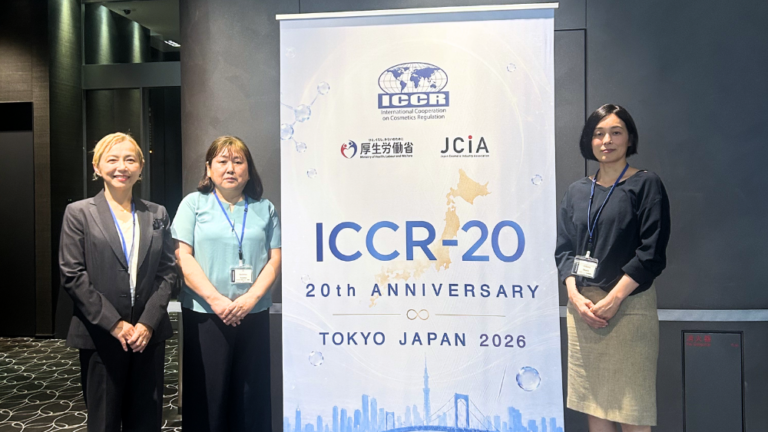
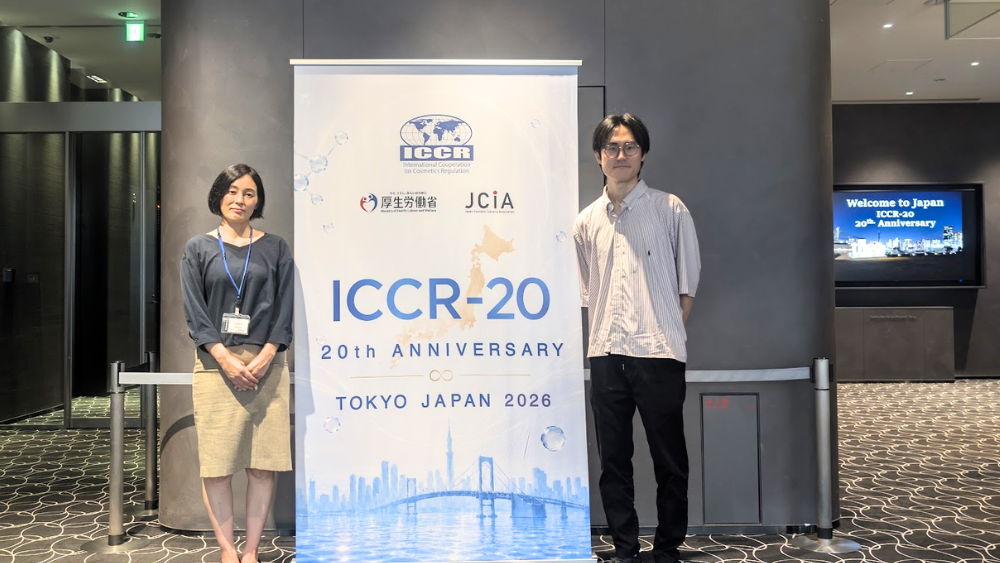
Chihiro Okada, Representative of the Animal Rights Center Japan, spoke at the stakeholder meeting of the International Cooperation on Cosmetics Regulation (ICCR) in her capacity as Vice Chairperson of the Japan Ethical Initiative (JEI).
The ICCR is an international conference involving cosmetics regulatory authorities from various countries and regions, including Japan, the EU, the United States, and Canada, where discussions are held on cosmetic safety and the international harmonization of regulations.
In this presentation, themed “The Future of Ethical Cosmetics,” proposals were made regarding the challenges that the cosmetics industry must face moving forward.
Focus should be placed not only on animal testing but also on animal-derived ingredients
Animal testing for cosmetics is now not only an ethical issue but also a critical issue for corporate management.
On the other hand, for many animal-derived ingredients such as collagen, glycerin, hyaluronic acid, keratin, and lanolin, there is currently a lack of traceability regarding how the source animals were raised and the environments in which they were produced.
The presentation proposed the necessity of understanding animal-derived ingredients throughout the entire supply chain and promoting responsible procurement, not only from the perspective of animal welfare but also from the viewpoints of human rights, the environment, and sustainability.
Furthermore, the presentation introduced the shift away from animal-derived materials, a trend already beginning in the apparel industry, and urged the cosmetics industry to consider a similar transition in the future.
Speaking as the Cruelty Free Beauty Campaign Committee
At this ICCR meeting, the “Cruelty Free Beauty Campaign Committee (CFB),” in which the Animal Rights Center Japan participates, also took part as a stakeholder. The presentation was delivered by Mr. Kamekura, Director of JAVA, and Ms. Higashi, Representative of PEACE.
The CFB proposed that all member countries should reach a common understanding that animal testing for cosmetics must be abolished. It also recommended that member countries set target dates for banning animal testing in the cosmetics industry and create specific roadmaps to achieve these goals.
Reactions at the International Conference
Regrettably, there were no questions or comments regarding this presentation from the participants, including regulatory authorities from various countries.
Additionally, as stakeholders from the corporate and industry association side, cosmetics industry associations from Germany and France also gave presentations (details of their content could not be confirmed).
However, after the meeting concluded, a commissioner from the United States approached us and expressed gratitude, stating, “It was very important that you addressed not only animal testing but also responsible procurement.”
They were also surprised to learn that Japan still lacks regulations prohibiting animal testing for cosmetics.
Connecting international discussions to Japanese policy-making
Globally, interest is growing not only in banning animal testing for cosmetics but also in supply chain transparency and responsible procurement.
The Animal Rights Center Japan will continue to work toward the abolition of animal testing and the realization of a cosmetics industry that considers animals, people, and the environment, in collaboration with the Japan Ethical Initiative and the Cruelty Free Beauty Campaign Committee.
Please support our petition to ban animal testing for cosmetics
The “Cruelty Free Beauty Campaign Committee” is conducting a petition drive calling for a ban on animal testing for cosmetics. The deadline is the end of August.
In Japan, animal testing for cosmetics is not yet prohibited. This issue is far from over.
Your support is needed to end the era where animals suffer for the sake of cosmetics. We kindly ask for your cooperation in signing the petition.
Presentation Content:
The JEI has formulated “Ethical Standards.” These standards are
- Environment
- Human Rights
- Respect for Consumers
- Animal Welfare and Animal Rights
- Information Disclosure
- Contribution to Local Communities
- governance
- Collaboration with Stakeholders
composed of these eight areas.
We believe that for cosmetics to be ethical, being safe is not enough. They should be considerate of people, animals, society, and the environment. We want companies to make improvements in all of these areas.
Consumers are no longer evaluating products alone. They are evaluating the companies that make those products. We are seeing the same shift in Japan.
In a consumer survey conducted by the Animal Rights Center Japan in 2023, 74.4% of respondents opposed animal testing for cosmetics. Among women, this figure exceeded 80%. Furthermore, 61.1% responded that “companies should develop products without conducting animal testing.”
This indicates that consumers expect responsible behavior from companies. Currently, animal testing is not only an ethical issue but also a business challenge. Institutional investors and consumers are increasingly demanding that companies move away from animal testing.
Now, what about the ingredients?
Many cosmetic ingredients are animal-derived.
However, consumers, and in many cases even the companies themselves, do not fully understand where those ingredients come from or how they were produced.
For example:
Collagen,
Glycerin,
Hyaluronic acid,
Lanolin,
Keratin,
and Elastin.
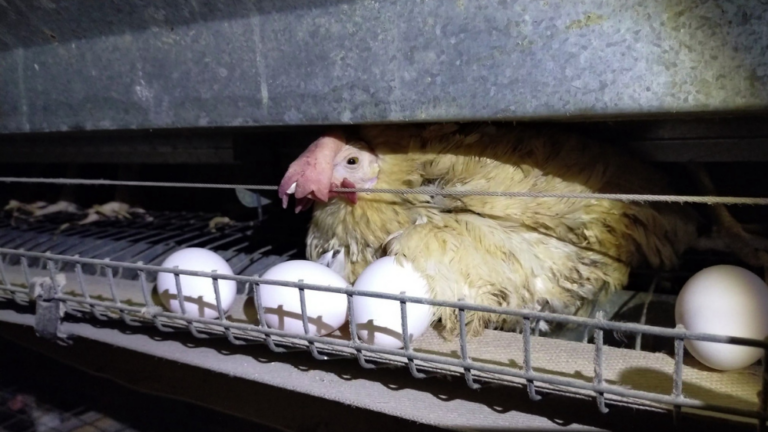
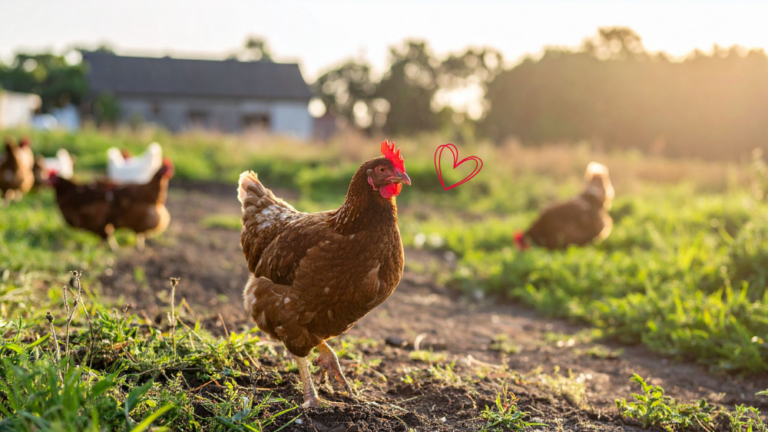
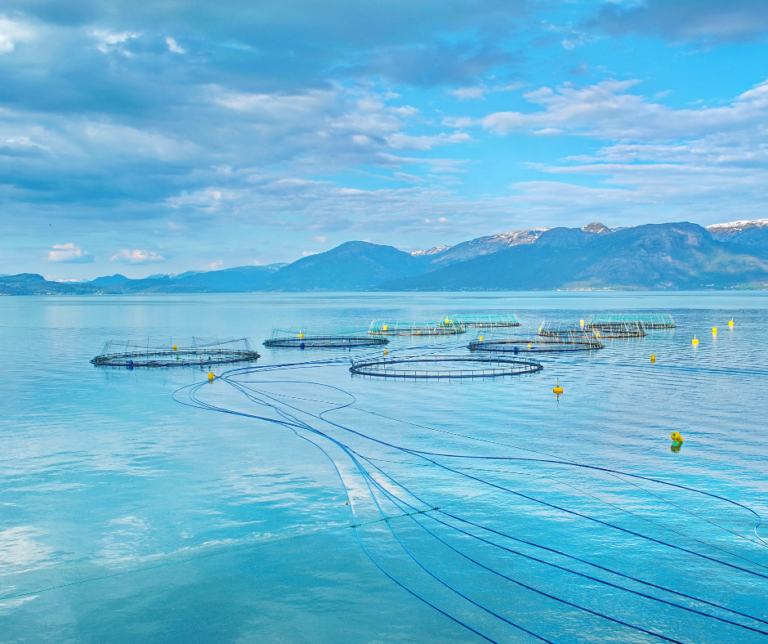
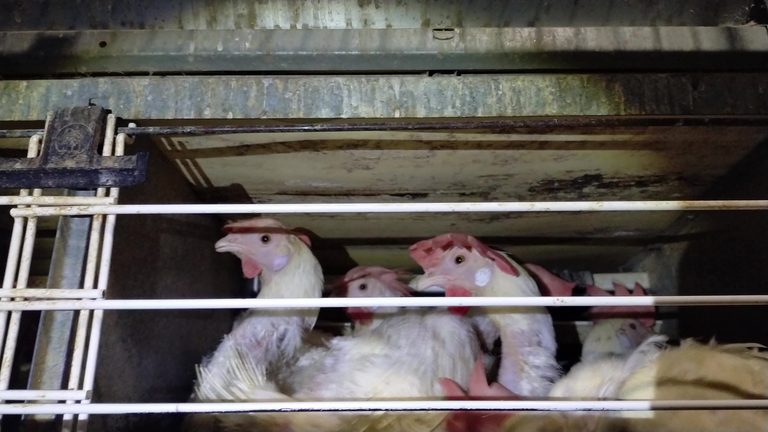
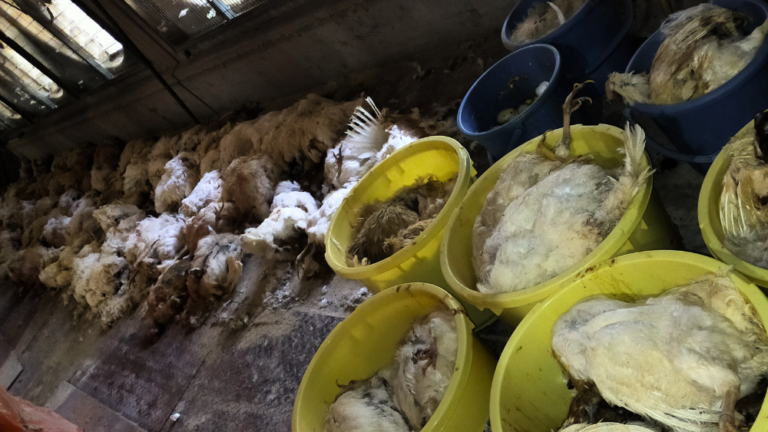
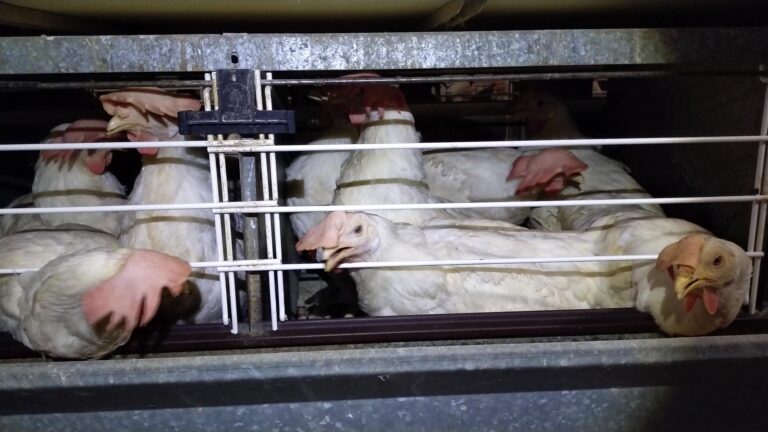
Behind these ingredients are real animals. In the case of pigs, collagen and glycerin may originate from production systems where sows are kept in gestation crates, barely able to move. For chickens, collagen and hyaluronic acid may be linked to cage farming, high-density stocking, and extreme rapid growth. For fish, there are concerns regarding high-density aquaculture and a lack of animal welfare during slaughter. For sheep, lanolin and keratin may be linked to mulesing and improper handling during shearing.
These issues are often invisible to consumers, yet they exist throughout the supply chain and deserve more attention. Furthermore, these production systems are related to broader social challenges, such as the risk of antimicrobial-resistant bacteria and future pandemics.
Many animal-derived ingredients no longer look like animal products. they take the form of powders, liquids, or specialized chemical components. Consequently, their origin and production methods are easily overlooked. However, they still originate from animals and livestock systems.
Do companies know if the animals that provided those ingredients were able to move freely, had access to water, or were subjected to painful procedures?
Without traceability, companies cannot assess the risks associated with their ingredients. In today’s global economy, a lack of traceability should not be the norm. We must carefully consider whether procurement can truly be called responsible for ingredients that cannot be tracked. Governments should promote public understanding of the risks associated with opaque supply chains. Furthermore, the ICCR can play a vital role in improving traceability and advancing international regulatory harmonization.
In 2024, we evaluated nine companies through the “Ethical Report Card.” Many companies already have policies opposing animal testing. However, very little information was publicly available regarding the procurement of animal-derived ingredients, animal welfare policies, or information disclosure at the ingredient level.
Consumers have far less information than companies regarding the origin and production methods of ingredients. This information gap is a significant issue. Just because there is no public outcry does not mean that risks do not exist. Currently, consumers do not have the information necessary to make appropriate choices. Transparency is a matter of accountability and consumer protection.
Animal welfare is becoming a corporate governance issue. Animal-related issues have repeatedly influenced consumer behavior, investor expectations, and corporate reputation. Animal-derived ingredients carry various risks, including those related to animal welfare, human rights, the environment, illegal activities, and sustainability. Companies emphasize human rights and environmental due diligence, so why are animal-derived ingredients alone excluded from sufficient supply chain due diligence? Should we continue to use ingredients without understanding the risks to animals, workers, land, water, and ecosystems?
The question is whether companies will take the lead in addressing these challenges or wait to respond until they become social problems. We believe the ICCR can play a role in positioning animal-derived ingredients within discussions on responsible procurement, due diligence, and corporate governance.
Many animal-derived ingredients originate from factory farming and intensive aquaculture. The risks to animal welfare, the environment, and sustainability associated with these systems are already well known. These challenges have been discussed in the food sector for many years.
Despite this, many cosmetic ingredients still rely on the same supply chains.
In reality, however, addressing these risks is not easy. Animal-derived ingredients undergo rendering and processing, taking forms such as powders or liquids that are far removed from the original animal. Tracking them requires an understanding of farms, hatcheries, slaughterhouses, processing facilities, feed production, and the entire international supply chain.
For this reason, the food industry is also moving toward plant-based, fermentation-derived, and other next-generation materials. This contributes to animal welfare, the environment, and long-term sustainability.
We believe the time has come to re-evaluate ingredients that rely on by-products of livestock and aquaculture.
The apparel industry is already moving away from animal-derived materials. The cosmetics industry should join this shift.
These challenges exist across borders and supply chains. They cannot be solved by a single company, organization, or country alone. This is why the ICCR is important. The ICCR has played a vital role in solving various challenges faced by the cosmetics industry. Cooperation among regulators, companies, researchers, and civil society is essential for the future of the cosmetics industry. The ICCR is in a unique position to bring them together.
Let us end animal testing for cosmetics.
And let us begin addressing the next challenge: animal-derived ingredients.
Behind those ingredients, at this very moment, billions of animals are living and dying in environments with severe animal welfare issues. The animals cannot wait.
We hope that the ICCR will further advance both the abolition of animal testing and the promotion of responsible procurement.