
Problems in Japan’s livestock policy brought to light in the House of Councillors Committee on Agriculture, Forestry and Fisheries
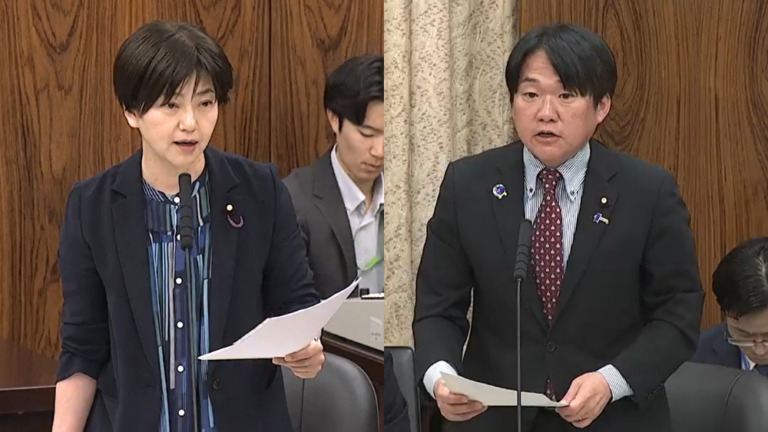
At the House of Councillors Committee on Agriculture, Forestry and Fisheries on May 12, 2026, MP Noriko Ishigaki, in light of last year’s mass livestock deaths caused by extreme heat, raised the issues of heat-stress measures for farmed animals and stocking density.
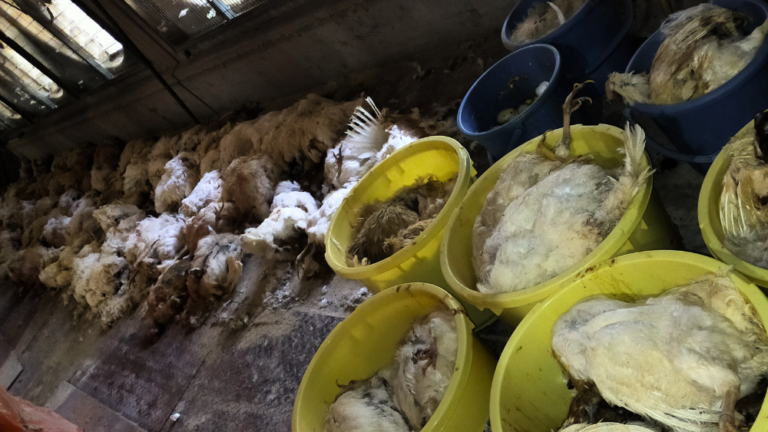
Last summer in Yamagata Prefecture, it was reported that 6,500 chickens and 80 pigs and cattle died due to the heat. As the climate crisis intensifies, measures against heat stress in livestock have become an unavoidable issue—not only for animal welfare, but also from the perspectives of stable production and infectious disease control.
MP Ishigaki pointed out that not only barn facilities but “overcrowded housing itself” may be worsening heat stress, and questioned the problem that Japan has no numerical standards for stocking density.
In response, Vice-Minister Yamashita stated as follows:
“In the WOAH Code, because climate, culture, and other factors vary greatly from country to country, no specific numerical standards are indicated, and diverse husbandry systems are recognized.”
However, this explanation significantly distorts the intent of the WOAH (World Organisation for Animal Health) Code.
WOAH does not say “numerical standards are unnecessary”
The problem with MAFF’s response lies in a leap in logic: “WOAH does not set a single, internationally uniform number” ⇒ “therefore Japan does not need to establish numerical standards either.”
In fact, the WOAH Code points in the opposite direction. WOAH Terrestrial Animal Health Code 7.1.4 states the following regarding animal welfare assessment:
“Whenever possible, outcome-based measurable variables or thresholds should be established for animal-based measures.”
(Whenever possible, measurable variables or thresholds should be established for animal-based measures.)
Furthermore,
“Competent authorities should collect relevant data to enable assessment and establishment of thresholds.”
(Competent authorities should collect relevant data to enable assessment and the establishment of thresholds.)
is also stated.
In other words, WOAH’s position is that:
- It does not set a single, uniform global standard,
- but each country should develop thresholds and standards suited to its own conditions.
This is not the same as saying, as MAFF did, that “because there is diversity, we will not quantify.”
WOAH treats “stocking density” as a key heat-risk factor
WOAH’s stance is not “because it is hot and humid, density standards are difficult,” but rather “because it is hot and humid, density management is necessary.” The WOAH Code clearly states that reducing stocking density is an emergency measure for heat stress. International research also consistently shows that in hot conditions, “lower density results in better welfare and health.”
Broilers (meat chickens)
In WOAH’s broiler chapter (Chapter 7.10), stocking density must not impede access to feed and water, normal behaviour, movement, rest, or normal posture. In the section on heat-stress management, it also lists
adjust stocking density
as a countermeasure.
International research further shows that heat stress worsens as density increases.
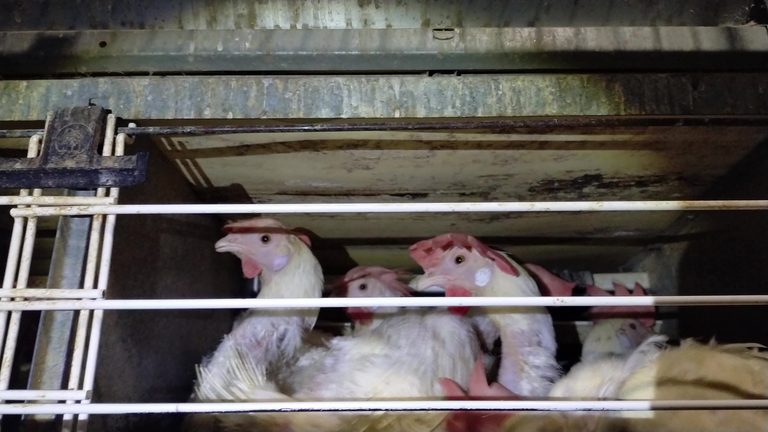
For meat chickens, management in kg/m² has become the international standard. In the EU, the usual upper limit is 33 kg/m², and up to 39 kg/m² is permitted under certain conditions.
A study comparing 31 kg/m², 34.5 kg/m², 38 kg/m², and 41.5 kg/m² found improved welfare at 31–34.5 kg/m². Under heat conditions, poorer growth, intestinal disorders, and deteriorated meat quality were also confirmed in the high-density groups.
In the EU as well, 33 kg/m² is the standard baseline upper limit, and numerical management using kg/m² is already widespread globally.
Laying hens
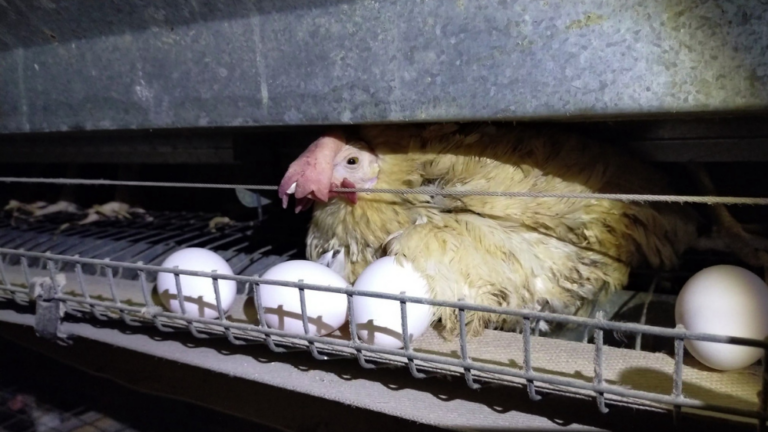
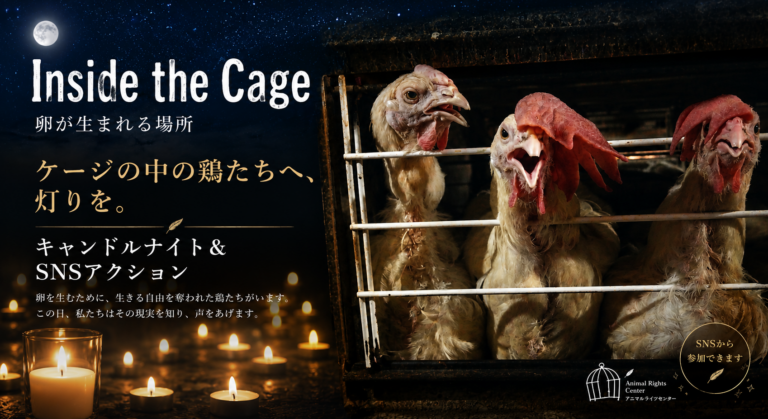
For laying hens as well, numerical standards are taken for granted internationally. In the EU, 750 cm² per bird is set as the minimum standard for enriched cages, and South Korea has also had minimum standards in place; from September 2027, these will be expanded so that 750 cm² per bird likewise becomes the minimum area. However, research suggests that even 750 cm² may not be “sufficient.”
Weimer et al. (2019) reported that, when comparing 465–484 cm², 581–645 cm², 652–748 cm², and 742–929 cm², the 742–929 cm² group had the best welfare outcomes.
In addition, a 2024 study compared 445 cm²/bird, 535 cm²/bird, 671 cm²/bird, 897 cm²/bird, and 1342 cm²/bird, and found improved health and behavioural conditions in the 897–1342 cm² group. Heat-stress research has also confirmed that the higher the density, the more difficult it becomes to dissipate heat.
pig
In WOAH’s pig chapter (7.13) as well, density is required not to impede lying down, movement, normal posture, or access to feed and water. In heat-stress management, adjusting density is considered an important measure.
Pigs’ sweat glands are largely non-functional, making them highly vulnerable to heat. Research shows that under high density, pigs cannot move away from one another, worsening heat stress.
- Inability to avoid contact
- Lying on feces and urine
- Increased heat load
and other factors are identified, and reducing density is considered an important countermeasure.
cattle (Bos taurus)
In WOAH Chapter 7.9 (beef cattle):
“Stocking density should be managed such that crowding does not adversely affect normal behaviour of cattle.”
(Stocking density should be managed so that crowding does not adversely affect normal behaviour.)
and, as an emergency heat-stress measure, it gives as an example:
“reduction of stocking density”
(reduction of stocking density)
.
Reduction is considered an important countermeasure.
Japan does not create standards, citing “diversity”
As MP Ishigaki pointed out, Japan still has no legal numerical standards for stocking density.
MAFF avoids quantification on the grounds of “diversity,” but internationally, in practice, management is advancing using:
- THI (temperature-humidity index)
- kg/m²
- cm²/bird
- m²/head
and so on.
In other words, it is not “because it is hot and humid, standards cannot be set,” but “because it is hot and humid, standards are necessary.”
What is being asked now is not an “effort target”
MAFF currently provides guidance using qualitative expressions such as “space to assume a normal posture.” However, this allows arbitrary interpretation in the field and cannot prevent overcrowded housing. As MP Ishigaki pointed out,
“Even if you allow some range, setting numerical values makes it easier to judge.”
This is precisely in line with international trends.
Both the WOAH Code and international research emphasize density management as a heat-stress measure. Nevertheless, Japan alone continues to avoid quantification, citing “diversity,” “hot and humid,” and “limited land area.”
Globally, the higher the heat risk, the more the trend is toward numerical management of stocking density. Japan’s explanation that “because it is hot and humid, we cannot quantify” runs counter to international trends and to science.
Transcript of the proceedings (transcribed by Animal Rights Center)
MP Noriko Ishigaki: We have a little limited time, but lastly I would like to ask about heat-stress measures. Last summer, in Yamagata Prefecture—Minister Suzuki’s home prefecture—there were reports that 6,500 chickens and 80 pigs and cattle died. Even amid last year’s record-breaking heat, we have seen situations where farm animals also die of heatstroke. The Japan Meteorological Agency says there is a possibility that temperatures will be high nationwide again this summer, so regarding heat-stress measures for livestock—well, the heat is already upon us; it is already getting hot, so I think those who are working on it are working on it—but we have only a little time left, so I will skip a few questions. First, could you briefly introduce what kinds of measures are available as heat-stress countermeasures for livestock?
Director-General Nagai, Livestock Industry Bureau: I will respond. Regarding heat-stress measures, we have long been working to thoroughly publicize, from the spring stage, efforts such as blowing air on livestock, sprinkling water, and applying slaked lime and paint to roofs. In addition, through the Livestock Cluster Project, the promotion of measures for initial heat in raw milk, and emergency measures, we are introducing equipment and materials such as ventilation devices, fine-mist devices, insulation, and heat-shielding paint to lower animals’ perceived temperature and the temperature in barns. We are also implementing support measures in dairy farming, such as shifting from artificial insemination to embryo transfer, so that high conception rates can be achieved even in summer. MP Noriko Ishigaki: Yes, as heat-stress measures, improvements to barns and so forth are certainly necessary. However, Japan fundamentally has no numerical provisions regarding stocking density for farm animals. If density is high, heat will be more likely to build up, and it can also be assumed that damage would be greater when infectious diseases occur. There is also the balance with production costs, so rebuilding barns will not be easy. Still, should we not set certain numerical targets for stocking density—allowing some range—and work toward reducing stocking density? Minister, what is your view?
Vice-Minister Yamashita: Excuse me. I have been yielded the floor. I am Vice-Minister Yamashita. Regarding the area for keeping animals and standards for density, these are international standards. In the WOAH Code, because climate, culture, and other factors vary greatly among countries, it does not indicate specific numerical standards and recognizes diverse husbandry systems. The Ministry of Agriculture, Forestry and Fisheries also promotes such diverse husbandry systems, and given that Japan is hot and humid and land area is very limited, we believe it is not easy to establish numerical standards for stocking density. On the other hand, in July 2023, the Ministry of Agriculture, Forestry and Fisheries formulated husbandry management guidelines on animal welfare. In them, we recommend providing sufficient space to allow animals to assume a normal posture, and avoiding adverse effects on normal behaviour and rest due to crowding, and we are working to encourage appropriate stocking density.
MP Noriko Ishigaki: Time is up, so I will end here, but rather than having standards that can be judged subjectively—standards that can waver due to arbitrary judgments—I believe that even if you allow some range, setting numerical values would make it easier to judge. I would like to take up this issue again in the committee at another time. That concludes my remarks.