
Questioning the “Quantity of Disclosure” and the “Valuation of Animals”
Corporate sustainability reports cover a wide range of social issues, including climate change, human rights, food loss, biodiversity, and natural capital.
So, how much is actually written about animals?
And as what kind of beings are the animals that appear in these reports treated?
The paper “Perspectives on non-human animals in corporate reporting: insights from the Nordic region,” published by Finnish researchers in the peer-reviewed academic journal Sustainability Accounting, Management and Policy Journal in January 2026, highlights two challenges in corporate reporting regarding this question.
One is the issue of “quantity,” where there are few descriptions regarding animals and a bias in the groups of animals covered.
The other is the issue of “quality,” concerning what kind of value companies attribute to animals in their reporting.
Even Among Nordic Companies, One in Five Does Not Mention Animals
Researchers selected 60 major Nordic companies from six industries—energy, retail, telecommunications/transportation, natural resources, food, and industry/construction—and analyzed their sustainability and annual reports.
The results showed that 48 out of 60 companies (80%) mentioned some group of animals. In other words, even in the Nordic region, which is considered to have a high interest in animal welfare and environmental issues, one in five companies did not mention animals at all.
Furthermore, there was a bias in the animals mentioned. Mentions of wild animals stood at 63%, while mentions of livestock animals such as cattle, pigs, chickens, and farmed fish were only 33%, and mentions of other animals like companion animals or laboratory animals were limited to 8%. Mentions of livestock animals were concentrated in the food industry.
What About Japanese Companies?
In Japan, there are no studies yet that compare companies under the same conditions.
However, in the Farmwise Impact published by the Animal Rights Center on July 31, 2026, only about 30% of major food companies had confirmed descriptions from the perspective of livestock animals.
Of course, a simple comparison is not possible as the survey subjects and methods differ.
Nevertheless, considering that approximately 80% of Nordic companies across all industries mention animals, it must be said that the disclosure of animal-related information by Japanese companies remains limited.
Moreover, the food industry is not the only sector where corporate activities impact animals.
Many industries, including adhesives, cosmetics, pharmaceuticals, clothing, and research and development, utilize animals directly or indirectly.
Not only food companies but all companies are required to understand how animals are utilized within their value chains—from raw material procurement to manufacturing, logistics, sales, and disposal—and to fulfill their accountability.
The Issue Is Not Just “How Much Is Written”
The importance of this paper lies not merely in counting the number of descriptions. What the researchers focused on was the point of “what kind of values are used to perceive animals.”
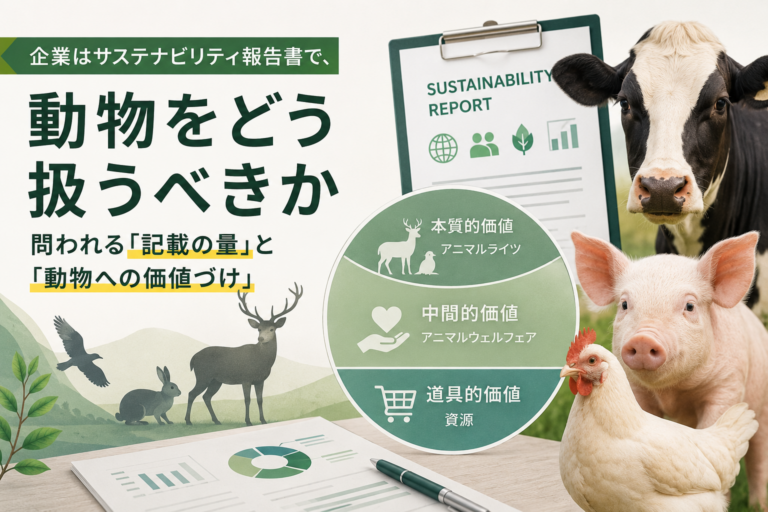
The paper categorizes the valuation of animals in corporate reporting into three types.
| Value | Positioning of Animals | Corresponding Concept |
|---|---|---|
| Intrinsic Value | Animals have value in themselves and are beings to be protected | Animal Rights |
| Intermediate Value | Beings whose animal welfare is protected, while assuming utilization by humans | Animal Welfare |
| Instrumental Value | Resources and means to achieve human objectives | Animals as Resources |
Intrinsic value is the perspective that views animals as having value in and of themselves.
Instrumental value is the perspective that views animals as a means to generate human profit, such as meat, eggs, milk, or production resources.
And positioned between them is intermediate value, namely animal welfare.
This classification clearly illustrates the characteristics of animal welfare, which does not deny the use of animals by humans but seeks to move beyond the idea of treating animals merely as resources.
Wild Animals as “Ecosystems,” Livestock as “Resources”
According to the paper, wild animals were primarily discussed in contexts such as “biodiversity,” “ecosystems,” and “species.” At first glance, this seems to recognize the value of nature itself, but individual animals tended to be treated as components for maintaining the ecosystem.
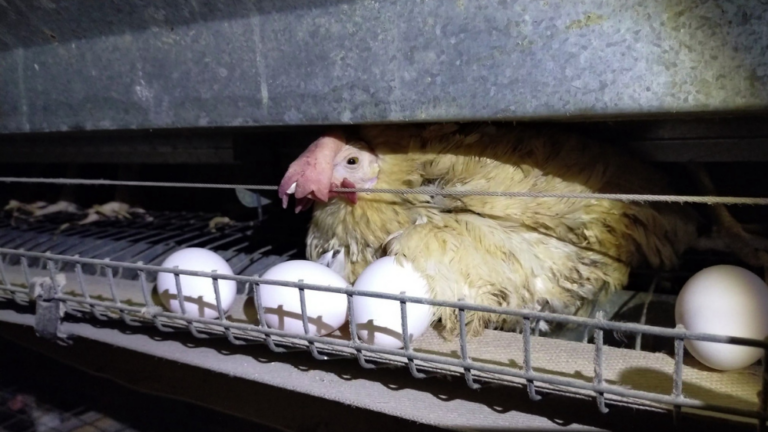
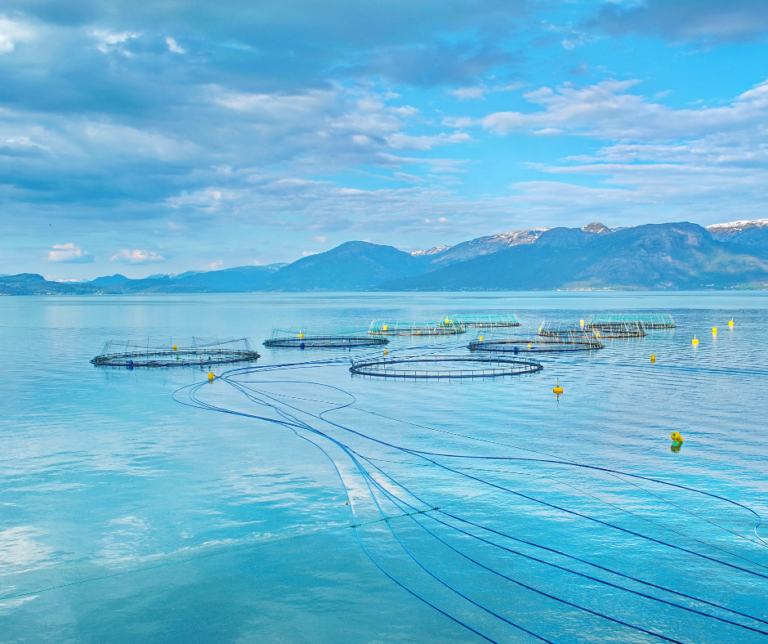
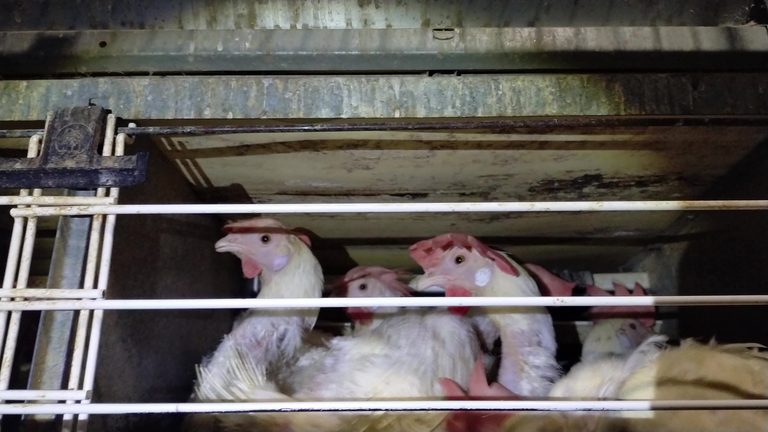
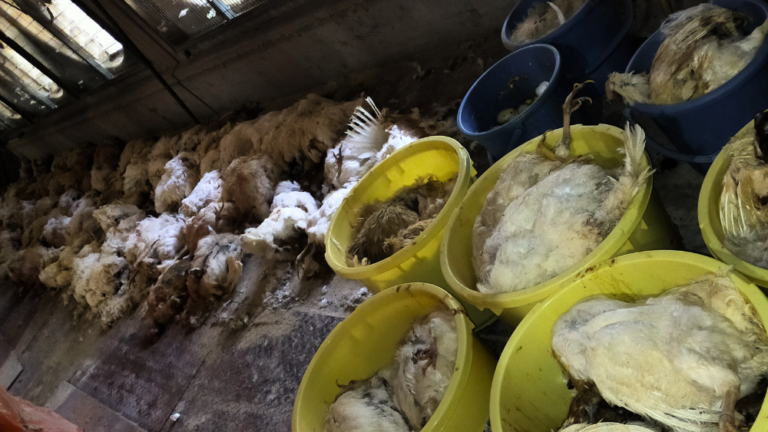
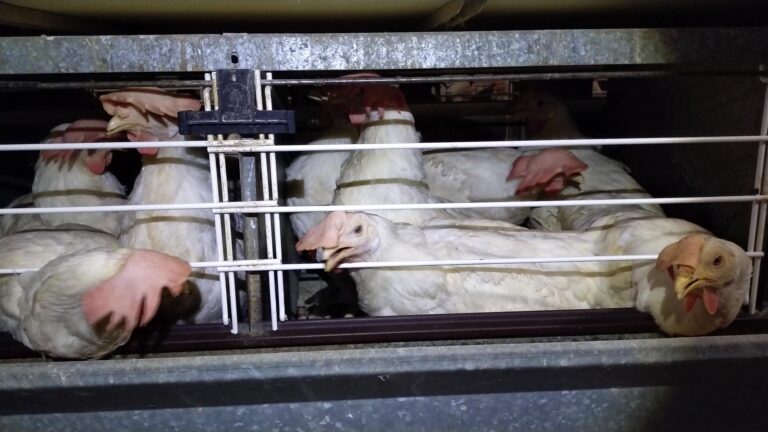
On the other hand, livestock animals such as cattle, pigs, chickens, and farmed fish showed a strong tendency to be described as production resources or species rather than as individuals.
In other words, wild animals were often discussed as resources supporting the ecosystem, while livestock animals were discussed as resources for producing commodities.
The paper concludes that for wild animals, there were many descriptions of intermediate and instrumental value, while for livestock animals, instrumental value was central, and descriptions from the perspective of intermediate value—animal welfare—were limited.
The Perspective of Moving Beyond Instrumental Value
Perhaps the most important implication shown by this paper is the positioning of animal welfare as an “intermediate value.”
Animal welfare is not a concept that denies the utilization of animals by humans itself.
However, it also does not take the position of treating animals merely as resources or objects.
It maintains the stance of considering the health, rearing environment, and reduction of pain for the animals being utilized.
Based on this classification, it is considered important for corporate sustainability reports not just to mention animals, but to evolve the content of those descriptions from instrumental value to intermediate value.
A step toward this would be for companies to disclose not only procurement and production volumes but also rearing methods, animal welfare policies, improvement goals, and progress.
What We Seek in the Sustainability Reporting of Japanese Companies
This paper is a study targeting Nordic companies and is not intended for direct comparison with Japanese companies.
However, the two questions of “how much are they reporting about animals?” and “as what kind of beings are they treating animals?” apply equally to Japanese companies.
How much are Japanese companies reporting about animals?
And as what kind of beings are they reporting animals to be?
What kind of policies do they hold regarding animal welfare, what goals have they set, and by when will they improve what?
To what extent are they disclosing that progress?
Furthermore, what is required in corporate reporting is not just “writing” about animals.
How much is being written?
And as beings with what kind of value are animals being treated?
Looking at corporate reporting from these two perspectives is essential for future sustainability information disclosure.
From instrumental value, which views animals merely as resources, to the intermediate value of animal welfare.
Corporate sustainability reports are standing at that very turning point right now.
Let us also regularly read through corporate reports from these two perspectives and, if we find issues, voice our opinions directly to the companies.
Reference Paper
Eija Vinnari, Pasi Pohjolainen, Markus Vinnari
“Perspectives on non-human animals in corporate reporting: insights from the Nordic region,” Published online January 22, 2026
Sustainability Accounting, Management and Policy Journal
DOI: 10.1108/SAMPJ-02-2025-0259