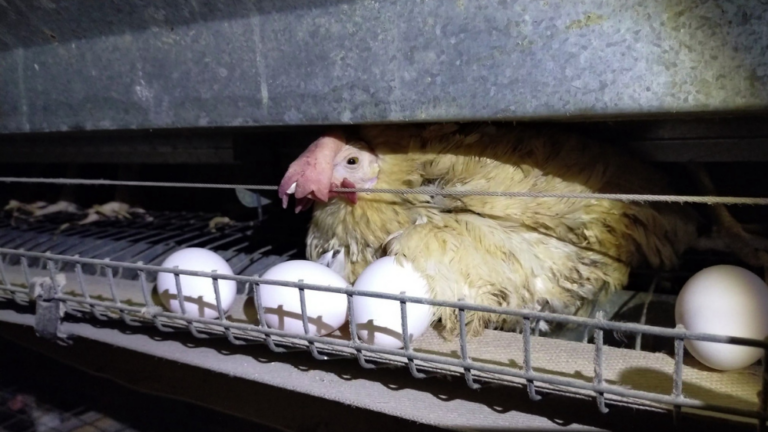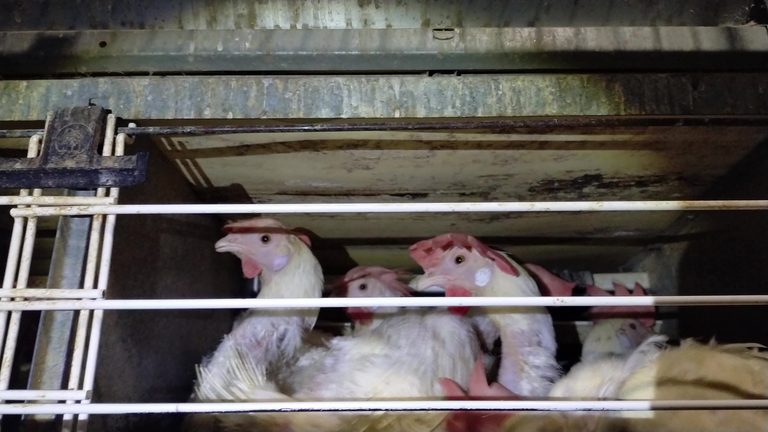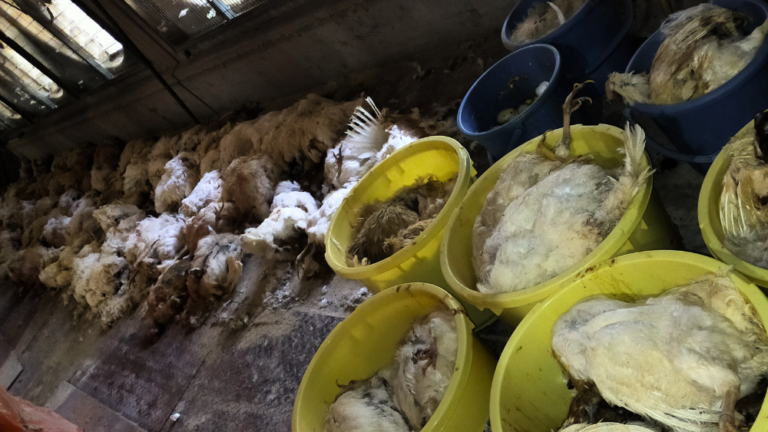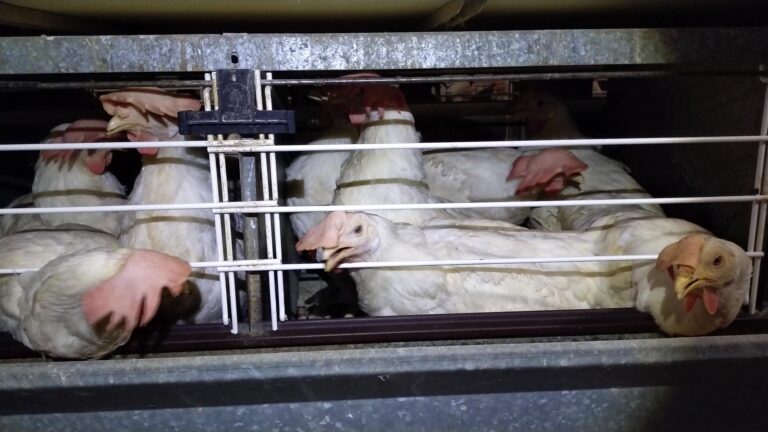

Cage-free for eggs, gestation-crate-free for pork.So,
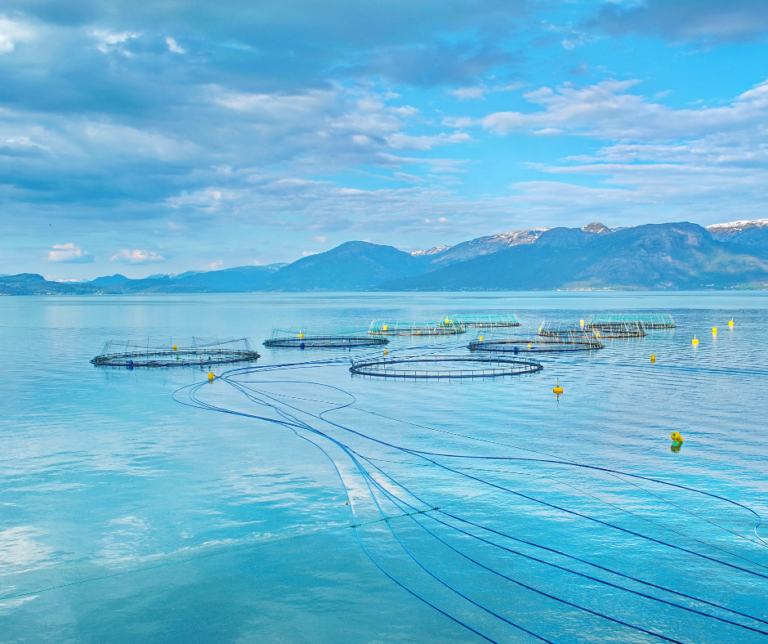
what should we choose for fish?
Even if you are interested in animal welfare for seafood, what to choose is still not as widely known for fish as it is for eggs or pork.
With fish—especially farmed fish, where poor conditions are a concern—you want to know what kind of environment they were raised in and how they were treated. For companies, the challenge is what seafood to source. For consumers, the challenge is what to look for at the store when choosing products.
It is difficult for any single company to investigate all of this. However,we now have a benchmark to rely on: ASC certification.
Animal Rights Center believes that, as a concrete way to advance animal welfare for seafood, both companies and consumers should choose ASC certification.
ASC Certification: Looking at Fish Welfare, Not Just the Environment
ASC certification is an international certification for farmed seafood produced with consideration for the environment and society.
Until now, many people may have associated ASC certification with “certification for environmentally responsible aquaculture.” ASC certification is now evolving further.
Under the new “ASC Farm Standard,” in addition to reducing environmental impact and considering workers and local communities, the health and welfare of farmed fish have also been incorporated as key assessment criteria.
It assesses not only water quality and the marine environment, but also the conditions in which the fish being raised are kept.
In other words, a perspective of animal welfare has been added to what “sustainable” seafood means.
This is also highly significant for companies.
It is not easy to create original standards for fish animal welfare from scratch and trace back to farms to verify each point. That is why companies should make use of reliable international certifications that comprehensively assess the environment, society, and animal welfare.
Animal Rights Center believes that companies working on animal welfare for seafood should move forward with obtaining ASC certification and switching to ASC-certified seafood.
In Japan, the shift has already begun
“Even if it’s ASC certification, isn’t that still a long way off in Japan?”
You may think so.
However, Japanese companies have already begun taking action.
AEON is expanding its lineup of certified products under its private brands. Nissui has also announced that it is improving its systems and readiness toward certification. In addition, moves toward certification are spreading to processed foods sold through consumer co-ops.
Furthermore, it is not only retailers and manufacturers. Initiatives are also spreading across the supply chain—for example, major distributor Shokuryo Co., Ltd. is moving forward with its response to certification.
What we should focus on here is not simply that “certified products are increasing.”
It is that the criteria companies use to choose seafood are beginning to change.
Price, quality, stable supply.
In addition, another decision criterion—“how the seafood was produced”—is increasingly being added.
It Would Be a Waste to End the Conversation at “Certified Products Are Expensive”
Of course, obtaining ASC certification and switching to certified seafood involves certain costs.
For companies, this is not an issue that can be ignored.
However, is certification truly an “extra cost”?
With a reliable certification, it becomes easier to communicate to consumers and business partners: “This is the standard we use to select seafood.”
It also helps differentiate products. It may also lead to access to new markets, including overseas.
And if the standards companies are expected to meet on the environment and animal welfare continue to rise, reviewing procurement early can also serve as preparation for future procurement risks.
That is why Animal Rights Center hopes companies will view responding to ASC certification not as a mere cost, but as an investment in building future product value and corporate competitiveness.
So, what should we do?
What is needed to expand ASC certification is not the efforts of producers alone.
Companies choose. Consumers choose.
As both increase, the market for certified seafood will grow.
When the market changes, corporate procurement changes. And when procurement changes, production further upstream will also change.
To consumers: When buying fish, look for ASC certification
At the fish counter in the supermarket, you may usually choose based on price or place of origin.
Add one more thing.Check whether it has the ASC certification mark.
One person’s shopping will not change the entire seafood industry. However, as more people choose it, what sells will change. When what sells changes, procurement by retailers and restaurants will change. And when procurement changes, producers will receive the message that “this is the kind of seafood that is being demanded.”
Therefore, if you find ASC certification, please choose it.
If you do not see it at the supermarket or restaurant you usually use, you can also ask, “Do you have any ASC-certified products?”
That, too, is one action that helps move animal welfare for seafood forward.
To companies: You can start with just one item
To restaurant chains, retailers, food manufacturers, and distribution companies:
You do not need to switch all seafood at once. First, take a look at the seafood you handle. Is there anything you could switch to ASC-certified products? You can start with just one item. If you are involved in production or processing, you can also consider obtaining ASC certification.
Corporate procurement does not end within a single company. If one company decides to “choose ASC certification,” that demand will be passed on to wholesalers, processors, and producers. In other words, companies have the power to change how seafood is produced through their day-to-day procurement.
So That Fish Animal Welfare Does Not Remain “Something Special”
Protecting the environment so that seafood can be used into the future. Considering the people who work there and local communities.
And improving the welfare of the fish living there.
There is no need to think about these separately. The mechanism to do so already exists.
All that remains is to increase the number of companies that choose it and the number of consumers that choose it.
ASC-certified seafood will no longer be a rare product, but something that can be chosen as a matter of course at supermarkets and restaurants alike.
And choosing fish with consideration for “how it was produced” will become normal rather than exceptional.
To advance animal welfare for seafood, Animal Rights Center will expand both corporate efforts to obtain ASC certification and switch to certified seafood, and consumer choices of ASC-certified seafood.