Animal Rights Center Japan wholeheartedly welcomes and celebrates this significant decision by the Meiji Group.
In Japan, where transitioning to cage-free remains challenging, setting a concrete percentage for domestic procurement carries great significance. Furthermore, the decision to make 100% of eggs used overseas cage-free represents a strong commitment to align with the progress of animal welfare standards in each country as a global corporation.
From Dialogue to Concrete Targets
Animal Rights Center Japan has maintained ongoing dialogue with the Meiji Group on animal welfare and has called for the publication of specific targets and deadlines for cage-free egg procurement.
For a company to establish new procurement targets, it must examine various challenges including raw material usage volumes, supply availability, costs, quality, and product impact. Particularly in Japan, where the supply of cage-free eggs remains limited, this could not have been an easy decision.
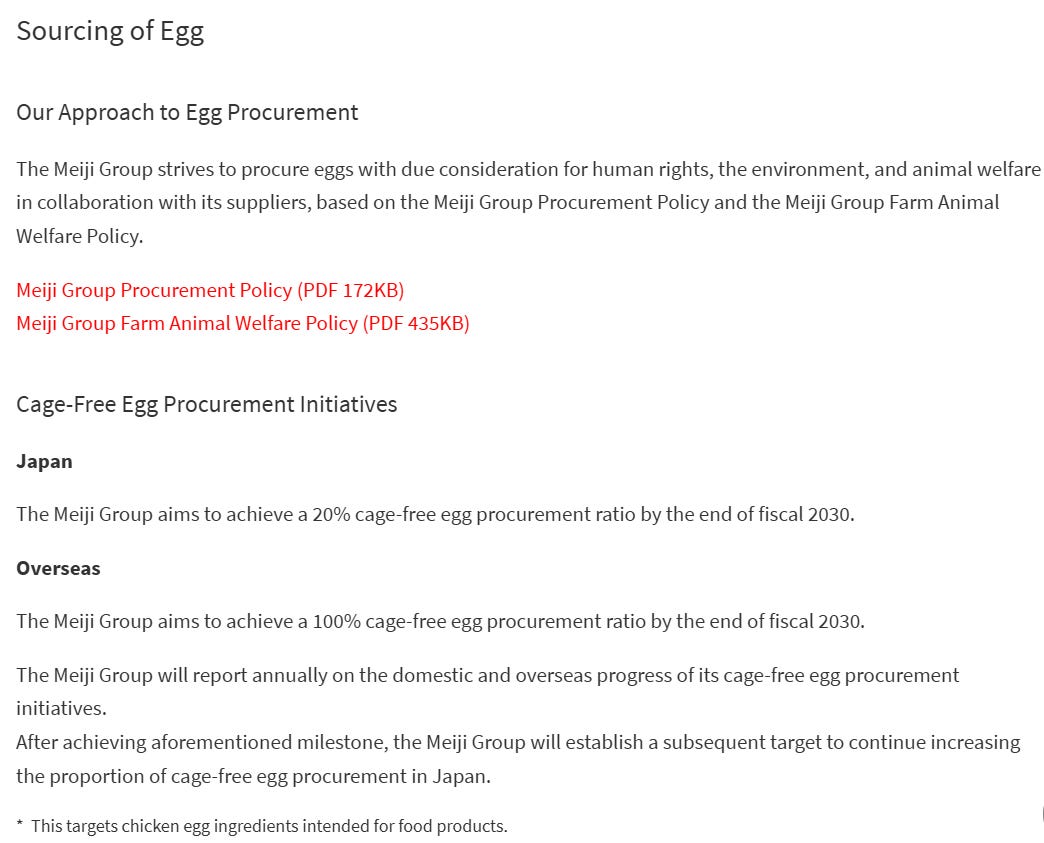
Nevertheless, the Meiji Group chose not to use current difficulties as a reason for inaction, but instead presented society with a deadline of the end of fiscal year 2030 and targets of 20% domestically and 100% overseas.
We express our sincere respect and gratitude to the Meiji Group’s management, staff, and all stakeholders who deliberated, coordinated, and realized this decision leading to its announcement.
Changing the “Hidden Eggs” Used in Confectionery
When people think of cage-free, many may picture shell eggs sold in supermarkets. In reality, however, eggs are used in a vast array of processed foods including biscuits, cakes, ice cream, bread, prepared dishes, and mayonnaise.
Changing “eggs as an ingredient,” which are difficult for consumers to see, is essential to significantly reducing the number of hens kept in cages. In particular, major confectionery manufacturers continuously produce a large number of products and procure large volumes of egg ingredients. If even a portion of that shifts to cage-free, it will signal new demand to suppliers and provide an important push for producers to decide to transition to cage-free.
Transformation in the Confectionery Industry Has Already Begun
Currently, not only the Meiji Group but other confectionery and processed food manufacturers are beginning to verify the rearing methods of eggs and consider switching to cage-free.
When major companies announce concrete targets, cage-free becomes a standard issue to be addressed in food ingredient procurement for their competitors as well—not merely something only a few progressive companies pursue.
We hope that the Meiji Group’s decision will have the power to lead other confectionery manufacturers to conclude, “We can do it too.” We also hope this will develop into a trend in which companies learn from one another’s initiatives, set higher goals, and compete to put them into practice.
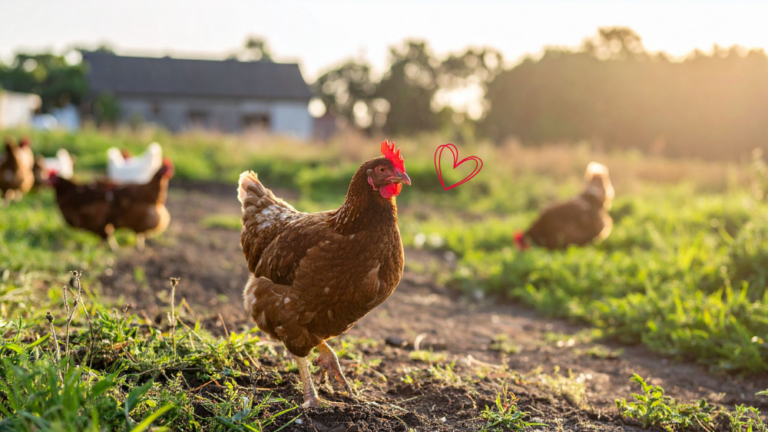
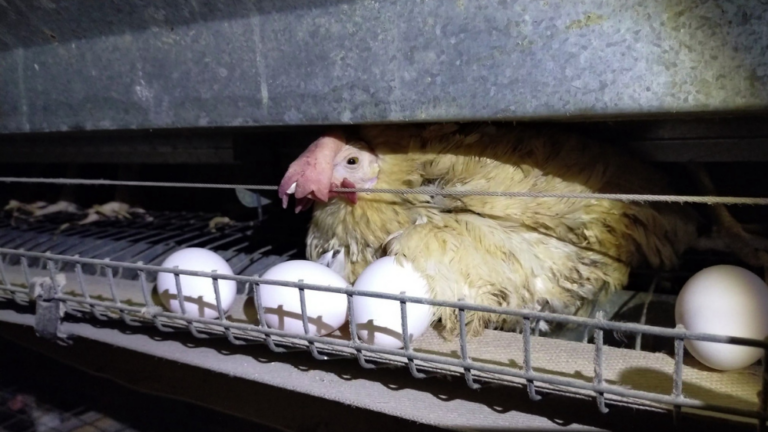
We wholeheartedly welcome this major step by Meiji Holdings toward a future where hens are not confined in cages. Once again, thank you.