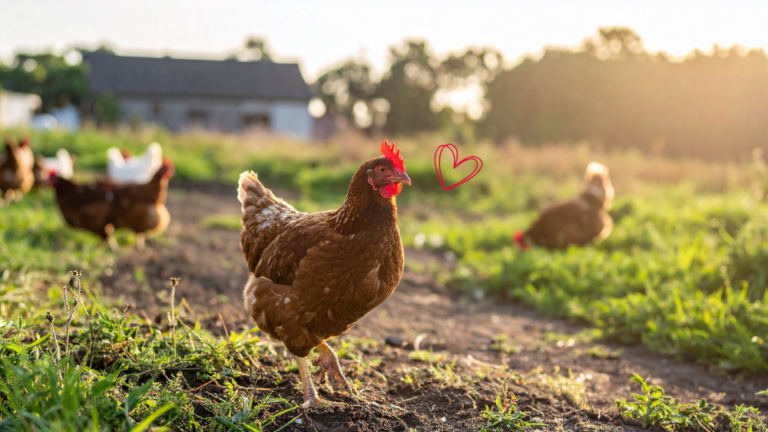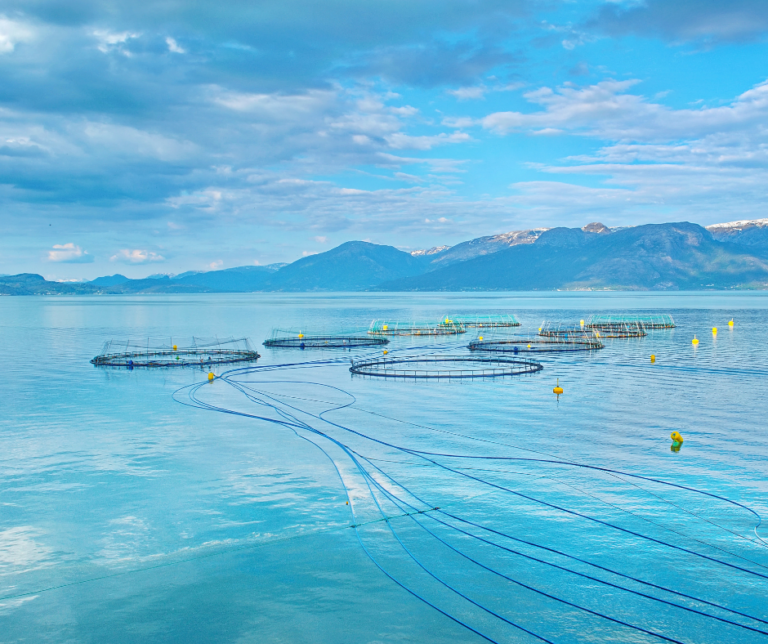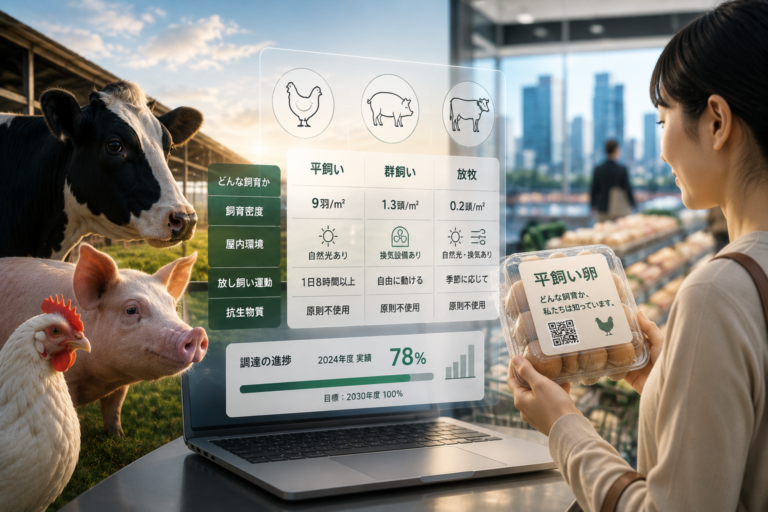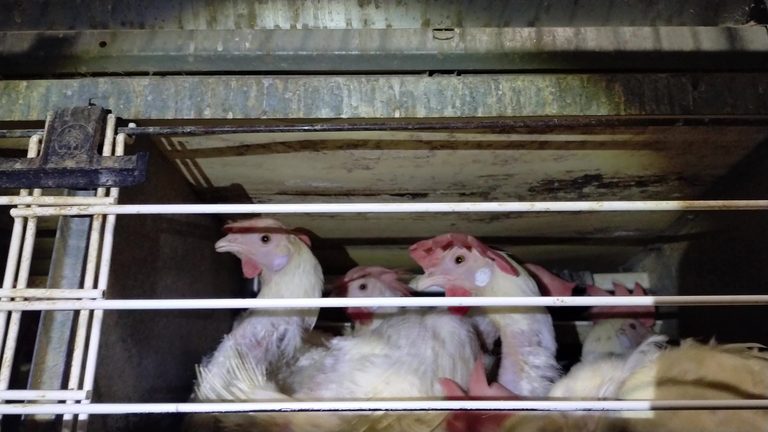

Cage-free laying hens, the elimination of gestation stalls for pigs, improved stocking density for broilers, aquatic animal welfare, alternative proteins—a variety of initiatives are now underway even among Japanese food-related companies.
Animal Rights Center Japan, a certified NPO, surveyed and evaluated the animal welfare initiatives of 177 food-related companies through FARMWISE Impact.
The survey revealed a shift toward companies expanding their initiatives across a wide range of areas. At the same time, the number of companies disclosing clear targets and progress remains limited.
Corporate initiatives span from livestock and aquaculture to alternative proteins
Of the 177 companies, initiatives related to alternative proteins were confirmed at 103 companies, laying hens/eggs at 60, broilers at 45, fish at 24, milk and dairy products at 23, pigs at 18, and shrimp at 12.
In addition to improving animals’ living conditions, efforts to expand alternatives to animal-based foods are also progressing.
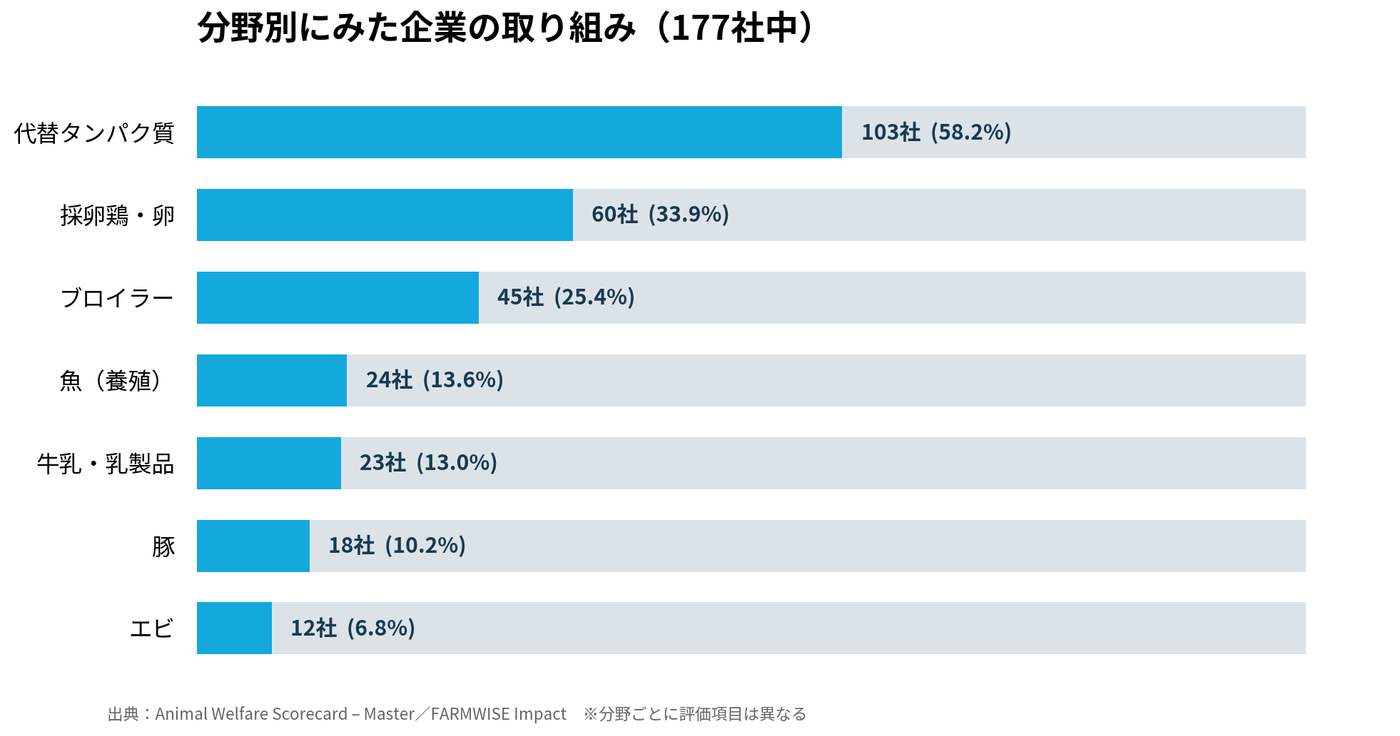
However, the extent of these initiatives varies significantly by category. Compared to alternative proteins and laying hens, fewer companies have established concrete policies regarding pigs or aquatic animals.
Laying hens: 58 companies working toward cage-free, 9 reporting progress
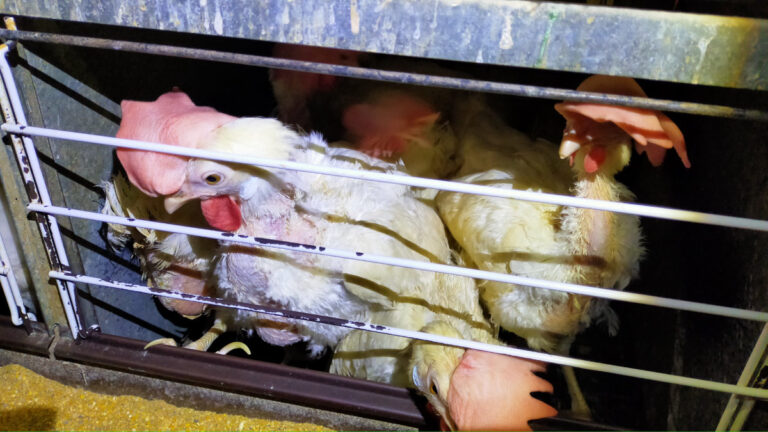
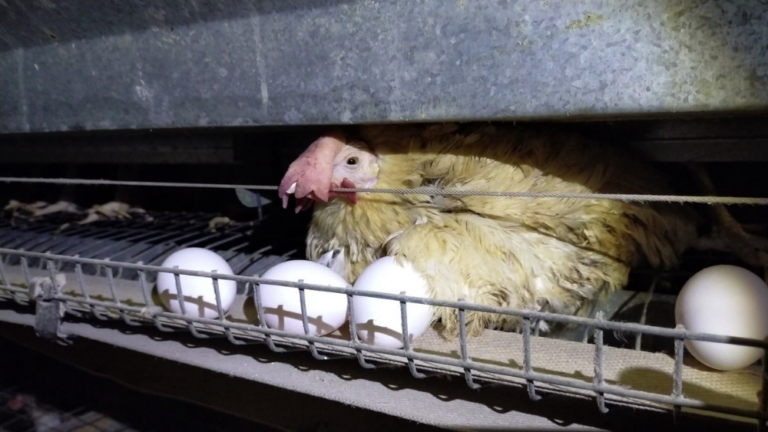
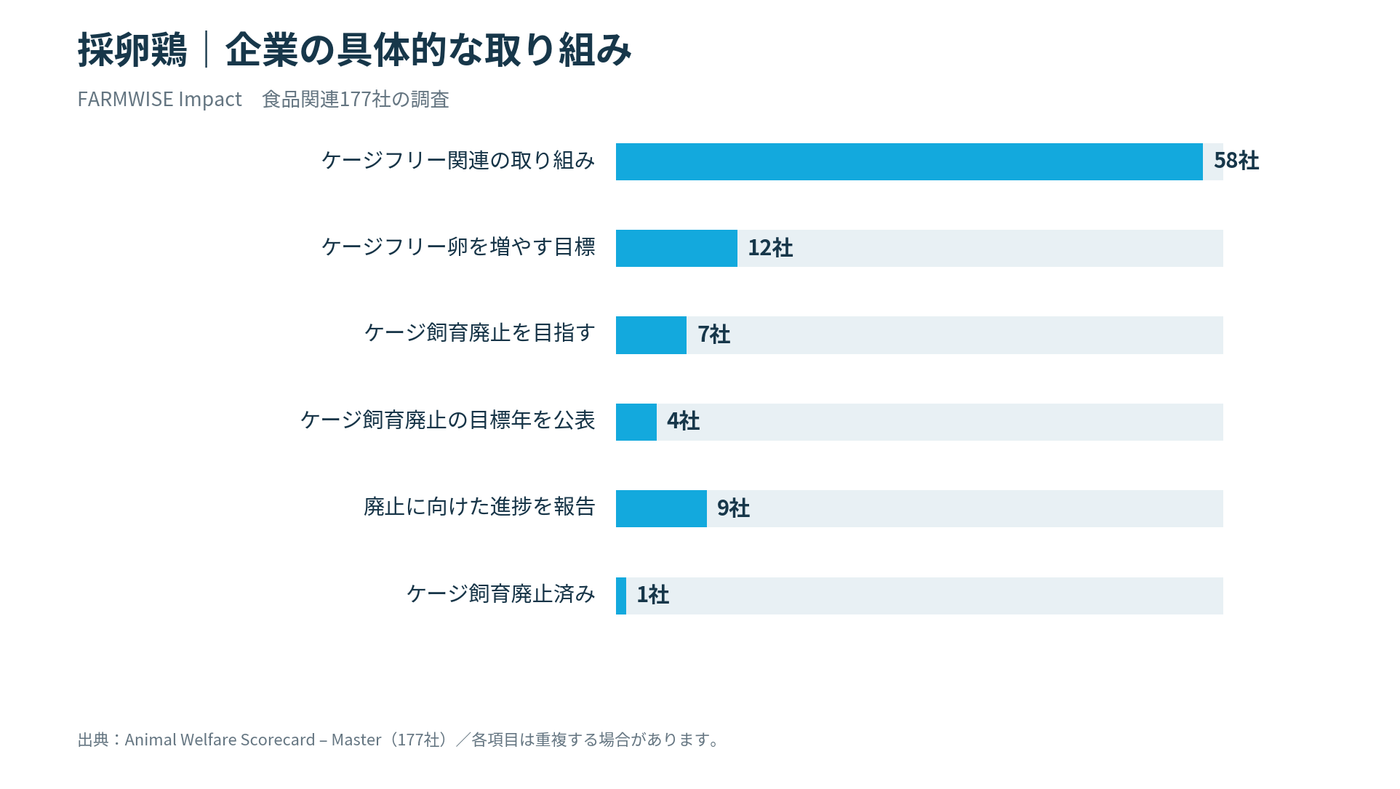
Regarding laying hens, 58 companies had initiatives related to cage-free practices.
Of these, 12 companies had targets to increase the proportion of cage-free eggs, and 9 were reporting progress toward eliminating cage confinement. Additionally, 7 companies aimed to eliminate cage confinement, 4 had published target years for elimination, and 1 had already eliminated it.
These figures indicate that interest in cage-free practices is beginning to translate into concrete procurement actions.
On the other hand, in order to improve the living conditions of laying hens, it is important for food companies to track the proportion of eggs they purchase, set transition targets, and publish annual progress reports.
Pigs: 17 companies working toward the elimination of gestation stalls
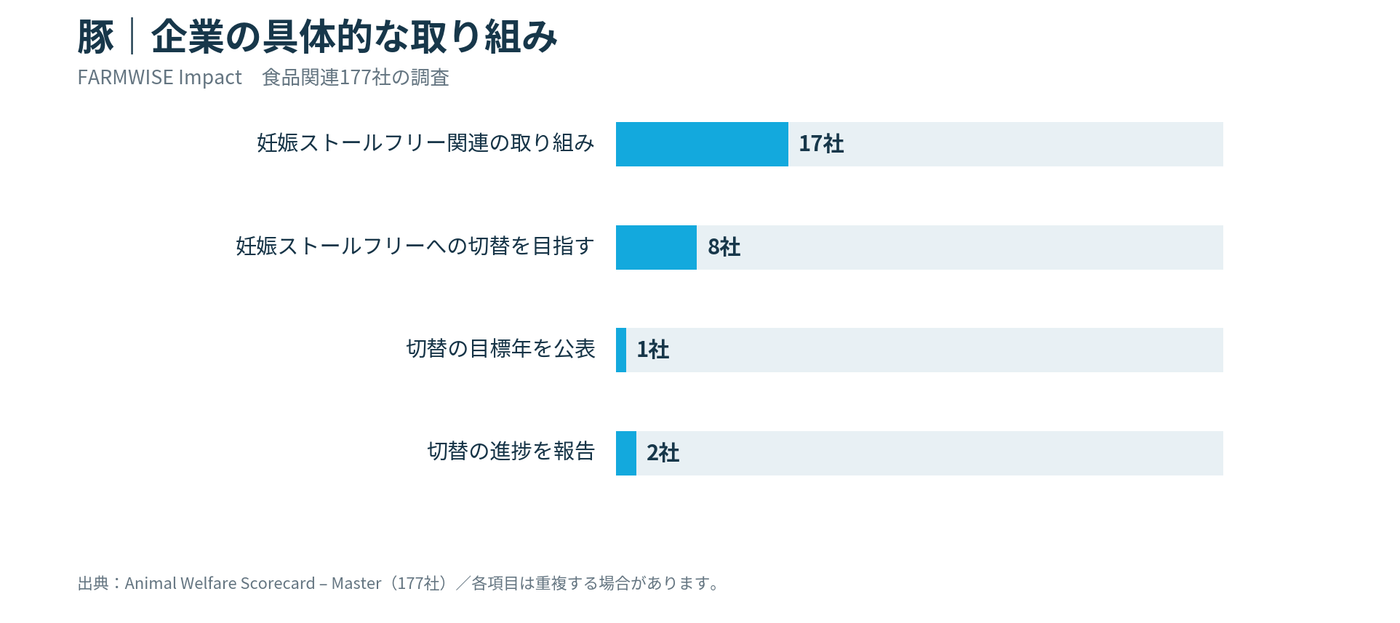
Regarding pigs, 17 companies had initiatives related to becoming gestation-stall-free.
Eight companies aimed to eventually transition to gestation-stall-free practices, 1 company had announced a target year for the transition, and 2 companies were reporting progress.
Gestation stalls are enclosures so narrow that sows cannot even turn around. Eliminating such confinement requires both equipment improvements by producers and procurement policies from food companies to support them.
Broilers: 44 companies working on stocking density
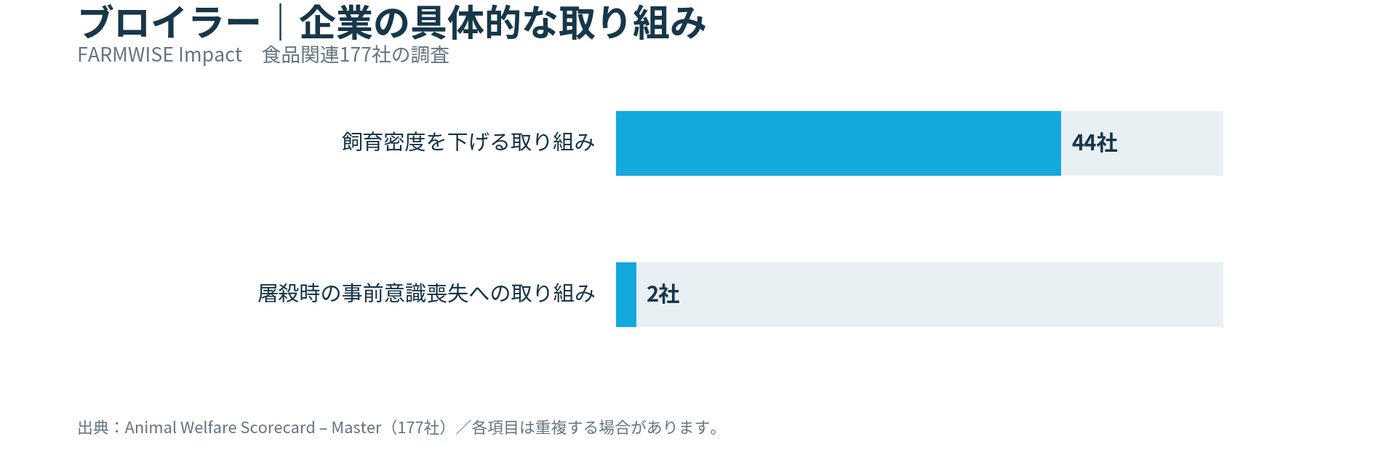
Regarding broiler chickens, 44 companies had initiatives to reduce stocking density.
Meanwhile, only 2 companies had confirmed initiatives related to pre-slaughter stunning.
Improving broiler welfare requires not only addressing overcrowding but also ensuring that birds do not suffer while conscious during slaughter.
Consistent improvements are needed from rearing through to slaughter.
Aquatic animals: ASC-certified fish procurement and the elimination of shrimp eyestalk ablation
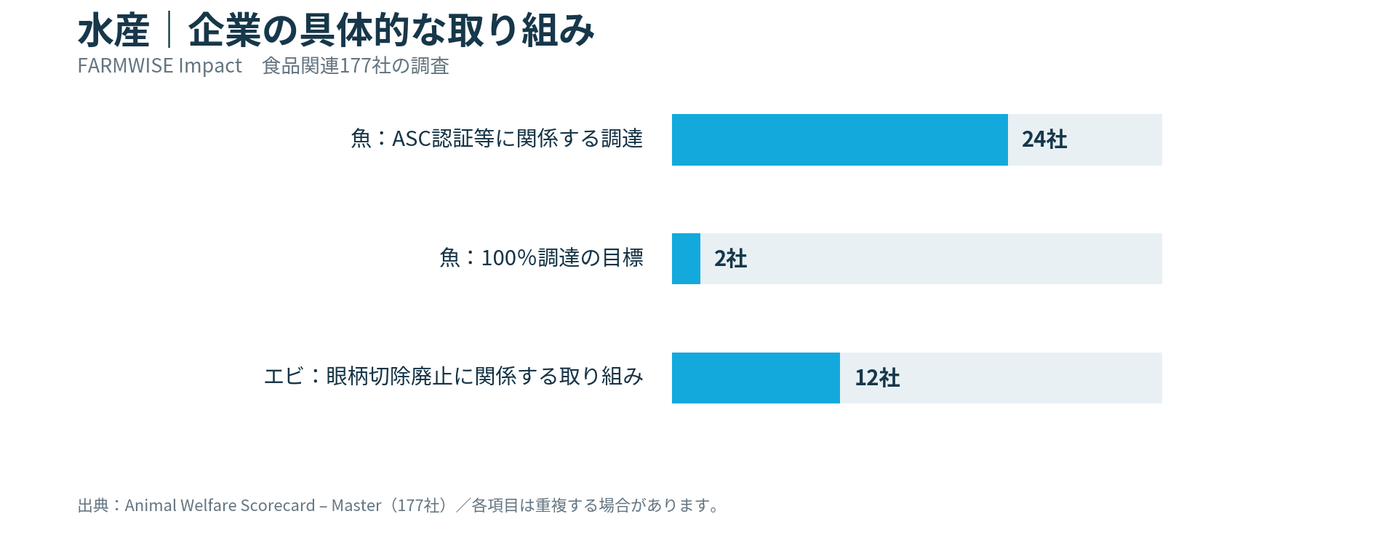
Regarding fish, 24 companies were confirmed to be sourcing from ASC-certified farms or farms capable of obtaining ASC certification. Two companies had targets to make 100% of such procurement.
Regarding shrimp, 12 companies had initiatives related to eliminating eyestalk ablation.
Fish and shrimp are also animals capable of experiencing suffering, and welfare considerations are needed throughout the processes of rearing, breeding, transport, and slaughter.
Aquatic animal welfare is one area where food companies should focus further efforts going forward.
Alternative proteins: Many companies offering new food choices
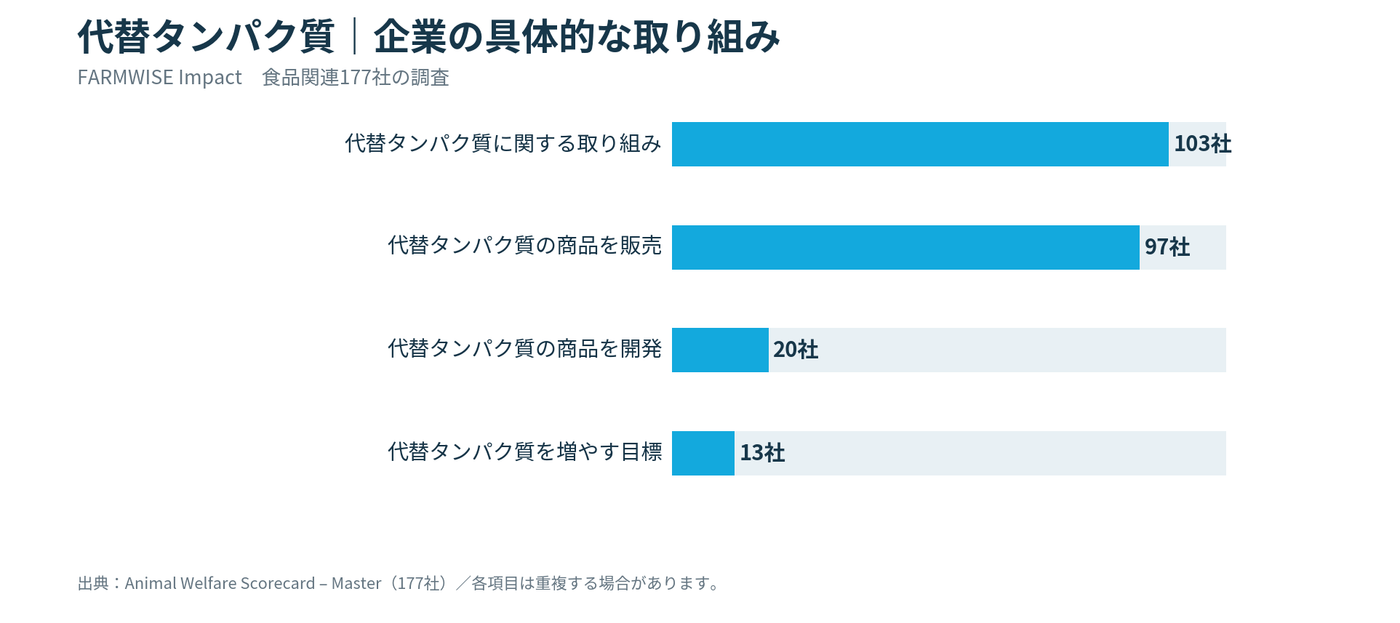
Initiatives related to alternative proteins were confirmed at 103 companies.
Of these, 97 companies were selling alternative protein products, 20 were engaged in product development, and 13 had targets to increase alternative protein offerings.
Reducing the consumption of animal-based foods, alongside improving living conditions, is an important way to change the circumstances animals are kept in.
By offering a diverse range of products, companies make it easier for consumers to make animal-conscious choices in their everyday shopping.
Corporate policy and governance remain insufficient
While initiatives related to individual products and procurement are spreading, efforts to position animal welfare as a company-wide priority remain limited.
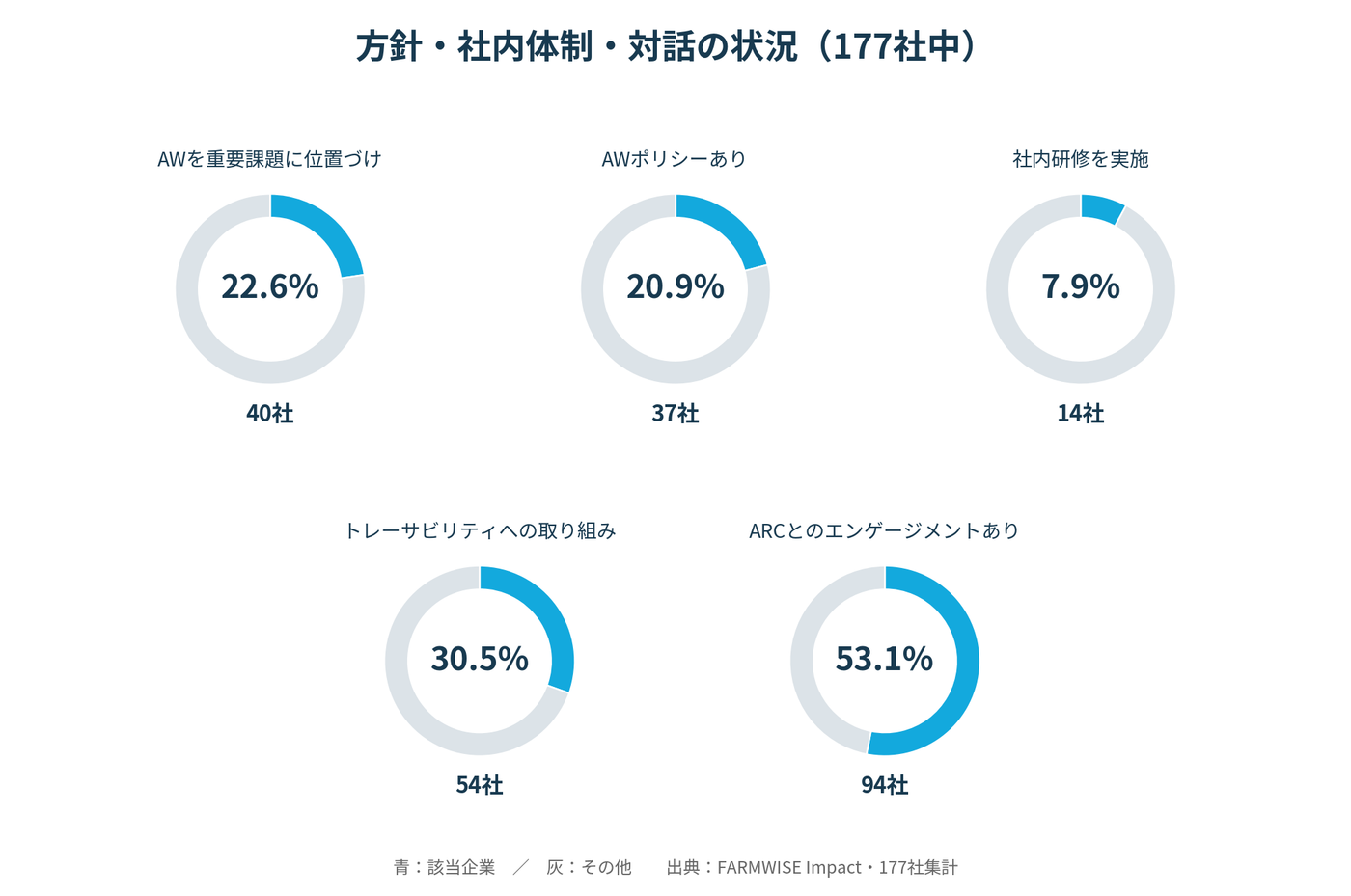
Of the 177 companies, 40 (22.6%) included animal welfare as a key priority issue, and 37 (20.9%) had an animal welfare policy.
In addition, 14 companies (7.9%) were conducting internal training, and 54 companies (30.5%) were working to ensure traceability of animal-derived ingredients.
94 companies (53.1%) had engagement with Animal Rights Center Japan.
To ensure that animal welfare does not remain limited to a handful of products or departments, it must be positioned as a core management priority, with clear procurement policies and targets, and implemented company-wide.
Turning initiatives into “changes in animals’ lives”
This survey demonstrated that Japanese food-related companies are beginning to move toward animal welfare.
However, having initiatives in place is not the same as actually improving animals’ living conditions.
What is required of companies is to set concrete targets, change their procurement and production practices, and disclose their progress.
Laying hens living in cages, sows confined in gestation stalls, broilers raised in overcrowded sheds, fish and shrimp in aquaculture farms—only when the lives of each and every one of these animals change will animal welfare initiatives truly carry meaning.
Animal Rights Center Japan will continue to expand these concrete changes through evaluations using FARMWISE Impact and ongoing dialogue with companies.
Survey overview
- Survey subjects: 177 food-related companies
- Data used: Animal Welfare Scorecard by FARMWISE Impact
- The number of companies in each category may overlap
- Engagement with Animal Rights Center Japan was tallied separately from companies’ implementation of animal welfare measures