
Let’s Make Our Voices Heard by MEXT!
The Ministry of Education, Culture, Sports, Science and Technology (MEXT) has begun soliciting public comments on the “Deliberation Summary” for the next Courses of Study and related guidelines. The comment period runs from October 6, 2026 to November 5.
For those of us who have long been concerned about animal welfare, this is an opportunity we cannot afford to overlook.
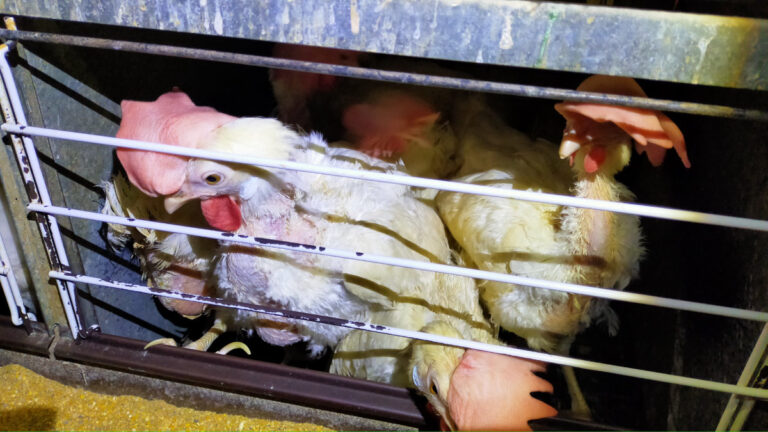
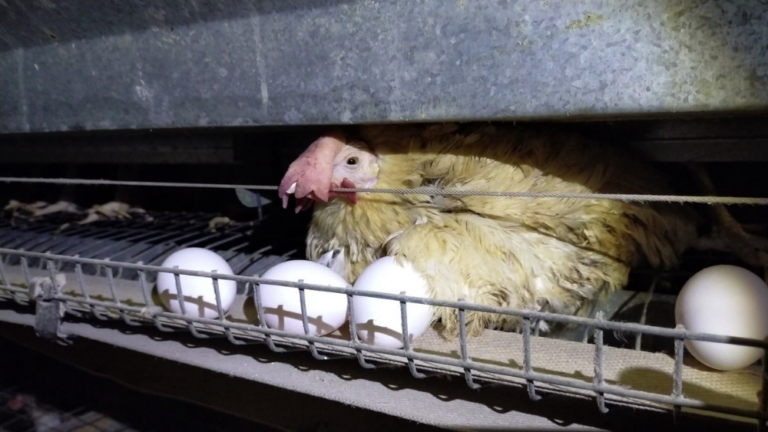
In recent years, the situation surrounding animal welfare in Japan has gradually been changing. Public interest has grown in issues such as the caged housing of egg-laying hens, gestation stalls for pigs, the management of dairy cows, and the transport and slaughter of animals. The Ministry of Agriculture, Forestry and Fisheries (MAFF) has also formulated rearing and management guidelines based on the international standards of WOAH (World Organisation for Animal Health).
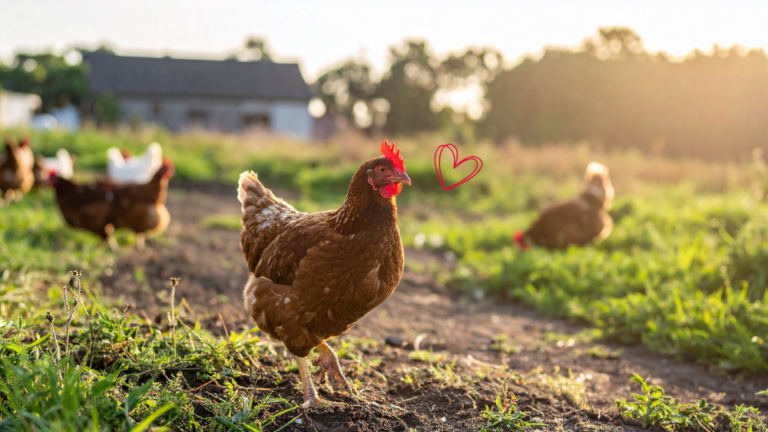
Corporate initiatives are also gradually expanding. It is no longer unusual to see “cage-free eggs” even in supermarkets.
So what about school education? How much are children, who will shape society in the future, learning about animal welfare at school?
Animal Rights Center Japan believes that the term “animal welfare” should be clearly positioned in the next Courses of Study. This public comment period is a valuable opportunity to convey this message to MEXT.
■ Why Is Animal Welfare Necessary in School Education?
If you are someone with an interest in animal welfare, you likely already know a great deal about the issues surrounding farm animals. But what about society as a whole?
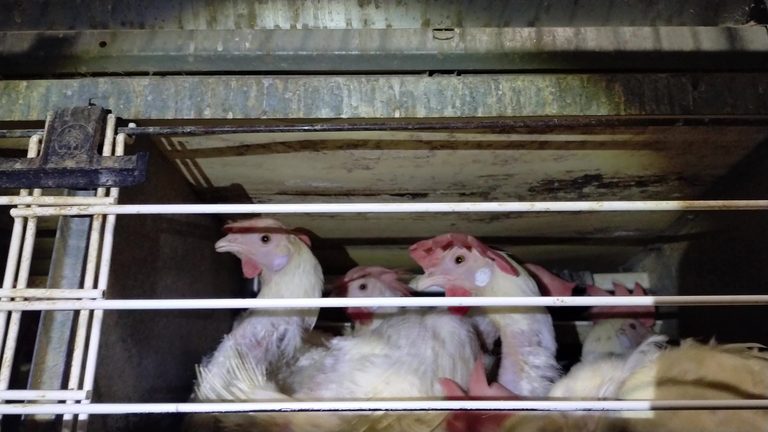
Many people reach adulthood without ever learning how eggs, milk, and meat are actually produced. What does caged housing actually involve? What are gestation stalls for pigs? What behavioral needs do cattle, pigs, and chickens have? Opportunities to learn even these basic facts remain insufficient.
In order to think about animal welfare, one must first know the facts. In this sense, the role of school education is extremely important.
It is essential to learn about animal physiology and behavior, actual rearing methods, production costs, environmental impact, hygiene, food supply, and the prices consumers bear, and then to think for oneself based on that knowledge.
Animal welfare need not be education that instills a single set of values; rather, it can be education that encourages thinking about the relationship between animals and humans from multiple perspectives—scientific, social, and ethical.
■ This Is Not Only an Issue for Agricultural Education
Of course, animal welfare will become increasingly important for students studying livestock farming at agricultural high schools. However, this is not a theme limited to agricultural education alone.
In science classes, for example, students can learn about animal physiology, ecology, and behavior. In home economics and food education, they can consider how the eggs, milk, and meat we eat are actually produced. In social studies and civics, they can consider the relationship to agricultural policy, international rules, corporate activity, and sustainable society.
And it is also very closely related to consumer education.
Consumers are expected to choose products and services by considering not only price and quality but also the environment, human rights, and animal welfare involved in the production process. Learning about animal welfare provides a concrete and accessible teaching material for understanding sustainable consumption and consumer citizen society.
Our shopping choices are not unrelated to how things are produced. What consumers choose also changes how companies behave. That is precisely why cultivating, within school education, the ability to think “how was this product actually made?”—beyond just price and quality—holds great significance.
■ What Is Written in the Courses of Study Matters
Some may think, “Couldn’t teachers simply address this in class if they choose to?” However, being positioned within the Courses of Study carries great significance.
If a term is explicitly stated in the Courses of Study or its accompanying commentary, this can lead to its inclusion in textbooks, teaching materials, teacher training, and classroom instruction. Conversely, if the term itself is not positioned there, while a dedicated teacher might address it on their own initiative, it is unlikely to become a theme that children across the country learn about systematically.
Moreover, the Courses of Study are not revised frequently. If animal welfare is not positioned in this revision, we may have to wait a much longer time until the next opportunity. That is precisely why it matters to make our voices heard now.
■ Please Submit Your Opinion in Your Own Words
In this public comment, Animal Rights Center Japan is calling for “animal welfare” to be explicitly stated in the next Courses of Study and its commentary, and for opportunities to be established for students to learn about it according to their developmental stage, across elementary, junior high, and high school.
In particular, we hope to see clear connections made with consumer education, food education, education on building a sustainable society, and agricultural education.
If you share this view, we would be grateful if you could submit a public comment. We would like you to write in your own words, drawing on your own experiences and interests.
If you have worked on issues concerning egg-laying hens, you can write about the need for children to learn about caged housing. If you are concerned about pig welfare issues, you can write about the importance of learning about gestation stalls and the natural behaviors of pigs. Those concerned about dairy cow issues, those working on slaughter and transport issues, those studying animal behavior, and those interested in consumer issues can each offer opinions from their own distinct perspective.
Even a single sentence, such as “Please explicitly state animal welfare in the Courses of Study,” is enough to start with.
What matters most, we believe, is conveying to MEXT that there are people who care about animal welfare, and that there are people who want it positioned in the education of the next generation.
■ How to Submit a Public Comment and Select the Relevant Item
Opinions can be submitted through the comment submission form found on MEXT’s information page.
On the comment submission form, you will need to select the item your opinion relates to. If your opinion calls for animal welfare to be positioned as part of the basic philosophy of the next Courses of Study or as a cross-curricular learning theme, Item ② would generally be the appropriate choice.
However, if you are making a specific proposal—such as incorporating animal welfare into consumer education in home economics, or into the moral education curriculum—an individual item may be more appropriate. Please select according to the subject of your opinion.
・MEXT’s information page can be found here
・The public comment submission form can be found here
・Reference: The comment submitted by Animal Rights Center Japan (below)
We request that “animal welfare” be clearly positioned in the next Courses of Study as one of the contemporary issues that students should learn about.
Animal welfare is not merely a matter of animal protection. It is a concept based on the premise that humans use animals in various contexts, including food production, and holds that the physical and mental state of animals should be given consideration throughout the processes of rearing, transport, and slaughter. Its importance is growing internationally, and in Japan as well, the Ministry of Agriculture, Forestry and Fisheries has formulated rearing and management guidelines on animal welfare based on international standards such as those of WOAH (World Organisation for Animal Health), and is promoting their dissemination and establishment.
However, opportunities for students to systematically learn about animal welfare within school education remain limited. If the cultivation of “creators of a democratic and sustainable society” is to be emphasized in deliberations toward the next Courses of Study, then animal welfare—which prompts consideration of the relationship between humans and animals and the nature of food production—is well suited to be positioned as a concrete learning theme.
In particular, animal welfare is also important in relation to consumer education. Consumers are expected to choose products and services by considering not only price and quality but also the environment, human rights, and animal welfare involved in the production process. Learning about animal welfare provides a concrete and accessible teaching material for understanding sustainable consumption and consumer citizen society.
For example, having students learn about the conditions in which the animals that produce eggs, milk, and meat—products they consume on a daily basis—are raised, and consider these from multiple perspectives such as price, safety, producers’ livelihoods, environmental impact, stable food supply, and animal welfare, constitutes excellent learning that is connected to real society. Understanding that the everyday act of purchasing a product is linked to how it is produced and to the state of society is also extremely important in nurturing independent, self-directed consumers.
We therefore propose that animal welfare not be treated as a theme limited to a specific subject, but rather be addressed across the curriculum according to students’ developmental stage. In doing so, it is important that this not become education that imposes a single set of values regarding particular rearing methods or dietary habits on students. It is essential that students be able to compare the characteristics, impact on animals, production costs, environmental impact, hygiene, and stable food supply associated with each rearing method based on objective data, and to think, discuss, and judge for themselves.
Furthermore, its importance is expected to grow even further when considering the production and distribution of agricultural and livestock products within the international community.
For the reasons above, we request that “animal welfare” be clearly stated in the next Courses of Study and its commentary, and that opportunities for learning according to developmental stage be established across elementary, junior high, and high school.