
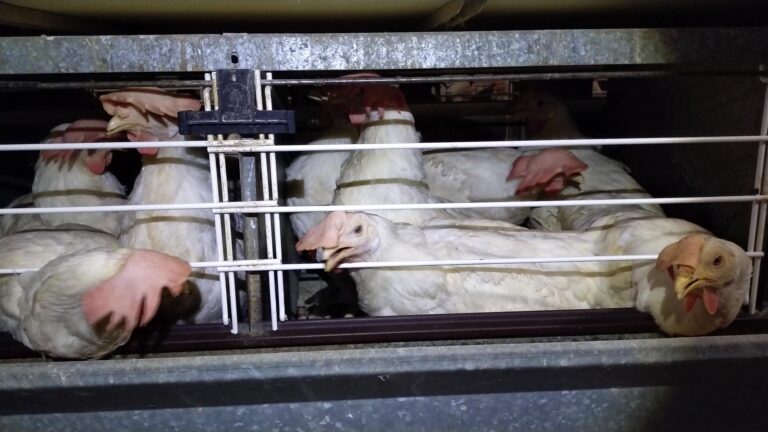
Dangerous heat levels of 37°C and 39°C continue to be recorded across Japan.
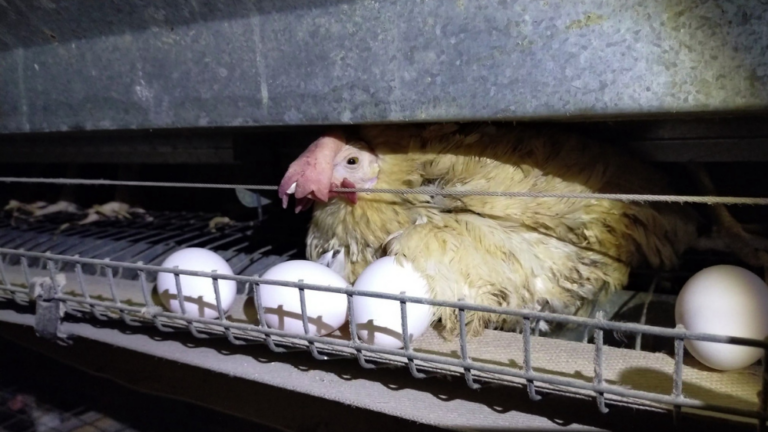
Laying hens are animals that suffer significant damage from heat. However, unlike humans, they cannot sweat to cool themselves down. When chickens get hot, they move their wings away from their bodies and breathe rapidly with their beaks open. This thermoregulatory behavior is known as “panting.” They attempt to lower their body temperature through evaporative cooling by evaporating moisture from their respiratory tract.
Open-mouthed breathing is not merely a sign that they “look hot.”
It is a sign that the chicken’s body is already struggling to release excess heat.
At what temperature do chickens begin to suffer?
Heat stress in chickens is not determined by temperature alone.
Factors such as humidity, wind speed, solar radiation, stocking density, drinking water temperature, the age and strain of the chicken, and prior acclimatization to heat all play a role. Even at the same 30°C, the burden on the chicken differs greatly between a dry, windy environment and a high-humidity environment with stagnant air.
A meta-analysis of chronic heat stress in laying hens indicates that 18–24°C is generally considered the thermoneutral zone, and thermoregulatory functions begin to activate once temperatures exceed 24°C.
Furthermore, in hot environments of 30–35°C, feed intake, egg production, egg weight, and eggshell strength decreased by 9–22.6% compared to a thermoneutral environment of 15–20°C.
Another study found that while no panting was observed at 25.3°C, some individuals began to pant at 30°C.
However, these figures should not be interpreted as “it is safe up to 30°C.” If humidity is high and airflow is weak, it becomes difficult to dissipate heat even at lower temperatures. The most important factor is not just the number on the thermometer, but the behavior exhibited by the chickens themselves.
Heat destroys the chicken’s entire body, not just the eggs
If panting continues, chickens lose excessive amounts of carbon dioxide through respiration. As a result, the blood becomes alkaline, and the electrolyte balance is disrupted.
Heat causes more than just a decline in egg production rates and eggshell quality.The following changes have been observed:
- Loss of appetite
- Requirement for large amounts of water
- Dehydration
- Weakened immune function
- Impaired intestinal function
- Oxidative stress and inflammation
- Strain on the heart and internal organs
- Inability to maintain body temperature, leading to death
Chickens are not machines for producing eggs. Even if egg production rates are maintained, it does not necessarily mean the chickens are comfortable.
From 1°C in midwinter to 26°C on the same day
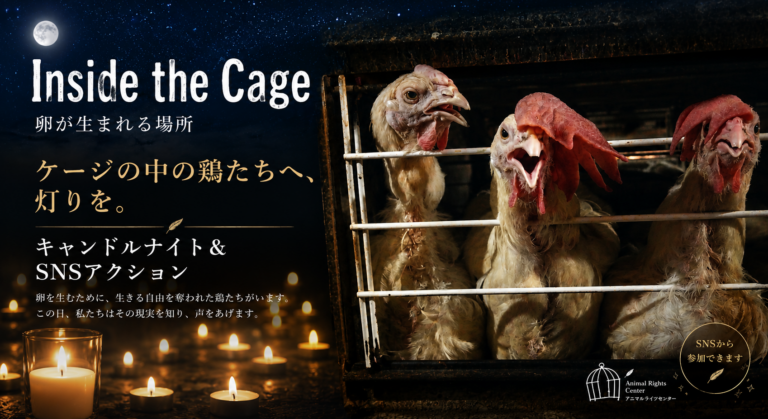
The Animal Rights Center Japan has released “Inside the Cage: Where Eggs are Born,” featuring long-term video footage and whistleblower reports from Japanese cage poultry farms.
The whistleblower began working in late January, during a period of snowfall.
Eggs coming from the first floor were so cold they were painful to touch. Although the Farm HACCP manual stated that “temperatures should not fall below 10°C in winter,” there were days in February when the poultry house temperature recorded 1°C.
Conversely, even in winter, the upper and rear sections of the poultry house reached high temperatures.
On one day in February:
- Front of 1st floor: 3°C
- Rear of 2nd floor: 26°C
This represents a massive difference of 23°C.
On the second floor, temperatures reached 29°C as early as February, and maximum temperatures reached 30°C for several consecutive days. There is also a record of the second floor reaching 29.7°C on a day when the outside temperature was 21°C.
Windowless poultry houses are generally described as being “less affected by outside air and easier to manage in terms of temperature.”
In reality, however, extreme temperature differences occurred within the same building depending on the floor and the location (front or back).
Chickens were already opening their mouths in March
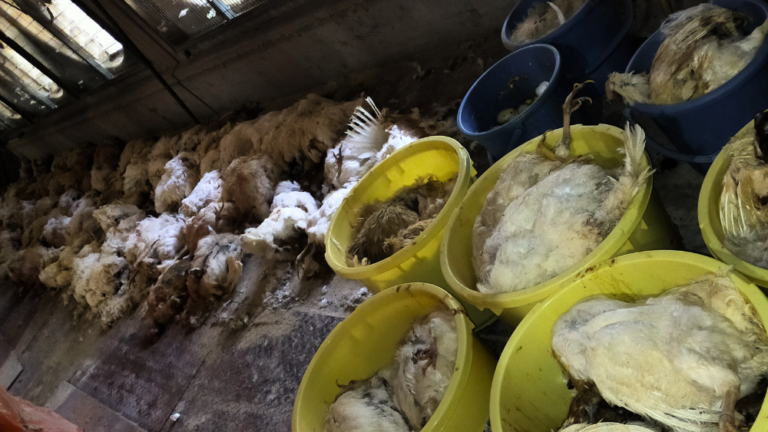
By early March, the chickens had already begun panting.
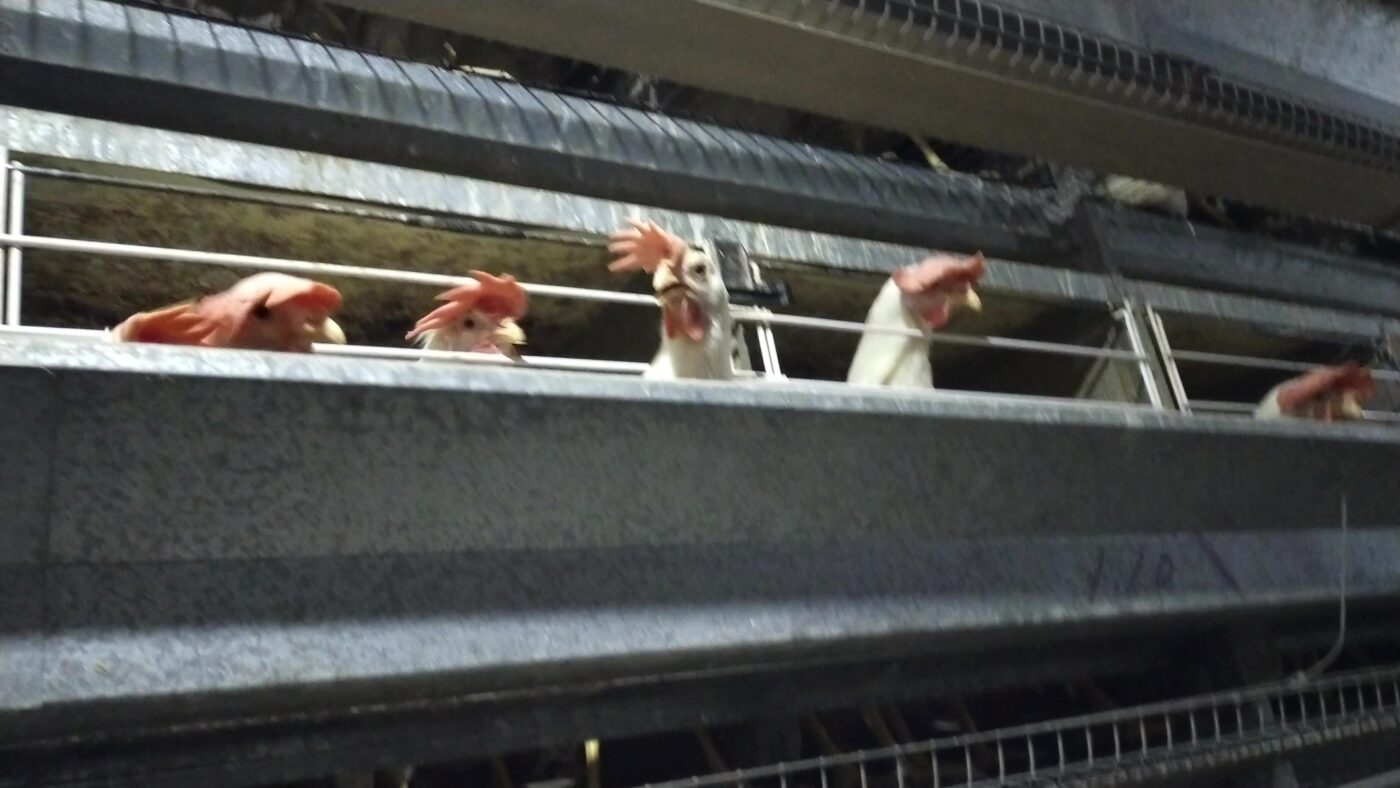
By late March, the number of chickens breathing with their mouths open increased significantly. Heat stress had already begun inside the poultry house during a season that otherwise felt like mild spring warmth.
Temperatures continued to rise thereafter.
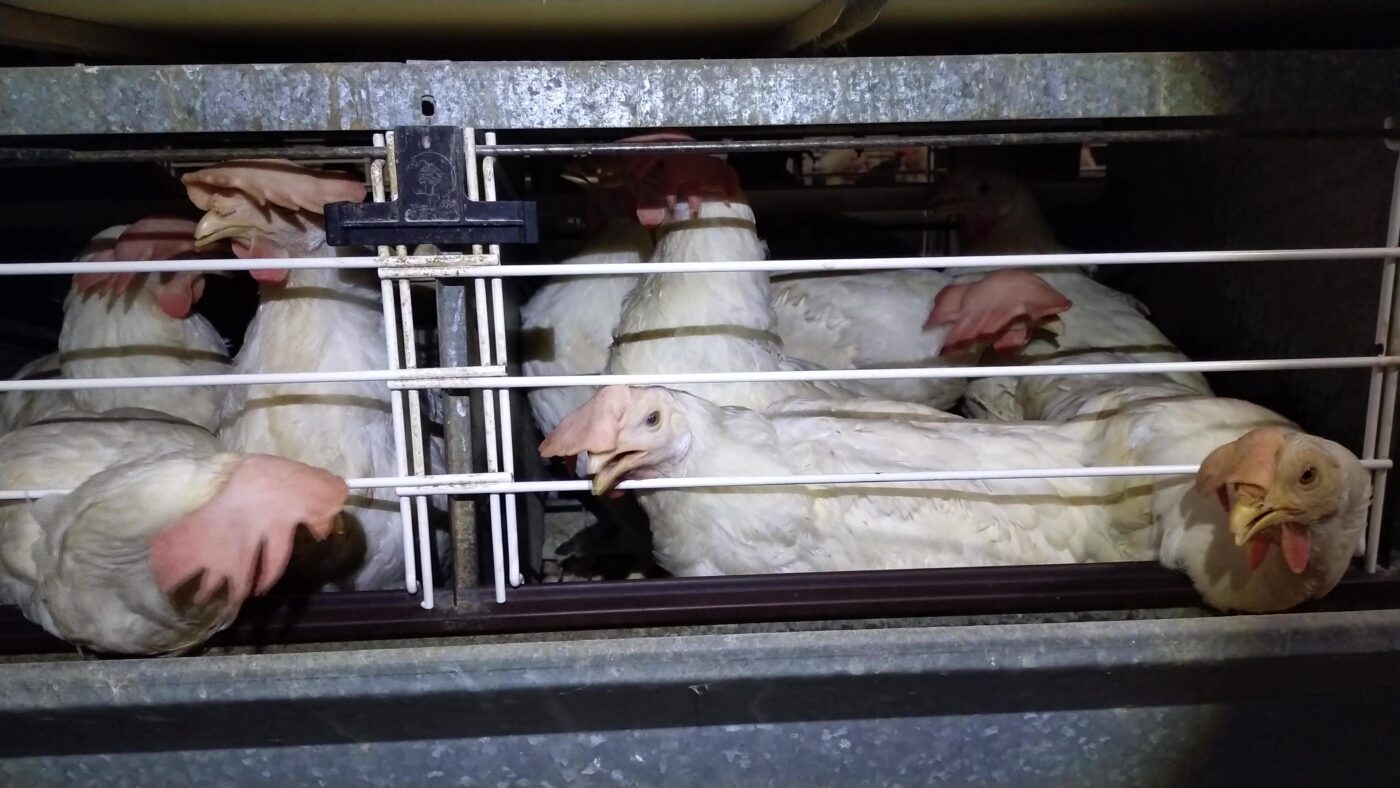
In July, the temperature in the poultry house aisles reached 36°C.
However, this 36°C was not the temperature measured inside the cages where the chickens are kept. The poultry farm only recorded values from thermometers installed at the front, center, and rear of the central aisles on each floor.
When measured with a thermometer brought in by the whistleblower, some aisles were more than 1°C hotter than the central aisle, and on some days, the temperature inside the cages was more than 2°C higher than in the aisles.
In other words, if it was 36°C in the aisle, it is possible that chickens inside the cages were exposed to even higher temperatures.
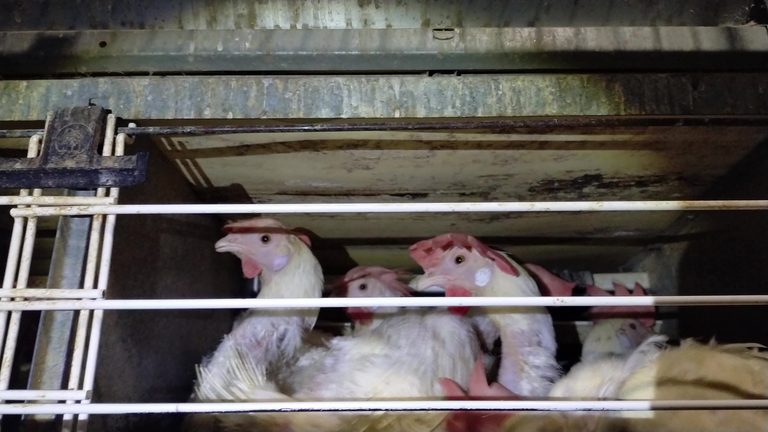
Because the aisles were slightly cooler than the inside of the cages, chickens desperately thrust their faces out through the wire mesh.
But they can only stick out their necks.
They cannot move to a cooler location. They cannot choose a spot with a breeze.
For the chickens in “Inside the Cage,” the heat was not a temporary disaster limited to August.
It had been ongoing since March, gradually worsening over time.
Inside the Cage: Where Eggs are Born