
Nationwide Survey of 1,144 Consumers on Male Chick Culling and In-Ovo Sexing
31 July 2026
Animal Rights Center Japan
Animal Rights Center Japan conducted a nationwide survey of consumers in Japan on male chick culling in the laying hen industry and its alternative, in-ovo sexing.
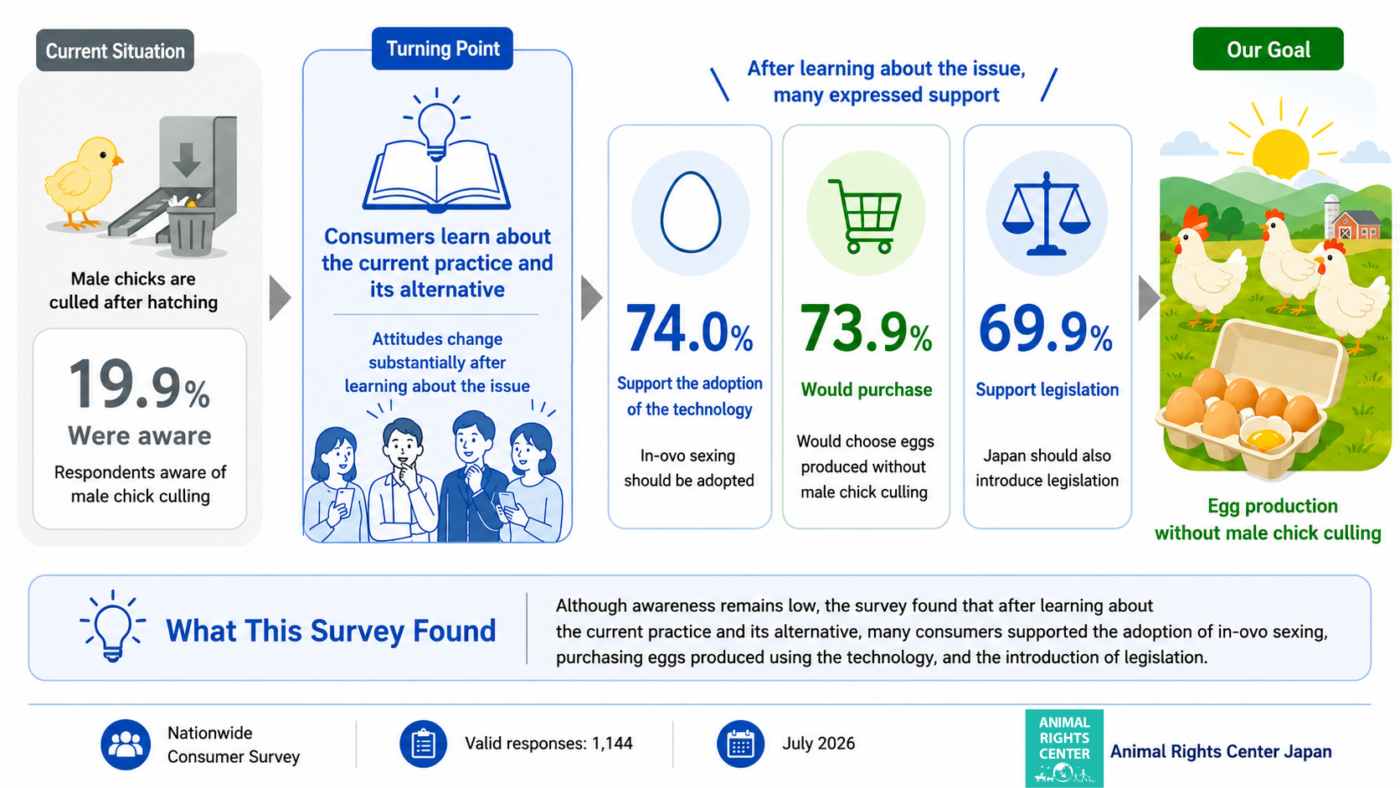
Analysis of 1,144 valid responses found that only 19.9% of respondents were aware that male chicks are culled. However, after receiving an explanation of the issue, 73.9% said they would be willing to purchase eggs produced without male chick culling.
Although public awareness remains low, the findings show that many consumers support the introduction of alternative technologies and related products.
Background
In Japan’s laying hen industry, most male chicks, which cannot lay eggs, are culled shortly after hatching. In-ovo sexing makes it possible to avoid this practice by determining the sex of the embryo before the egg hatches.
Countries such as Germany and France have introduced legislation on male chick culling and begun the commercial use of in-ovo sexing technologies. In Japan, however, neither comparable legislation nor commercial adoption has yet been confirmed.
This survey was therefore conducted to understand how consumers in Japan perceive male chick culling and its technological alternative.
Key Survey Findings
The following infographic summarizes the main findings of the survey.
The Survey Findings in Detail
The following sections present the survey findings in greater detail.
1. Only 19.9% Were Aware of Male Chick Culling
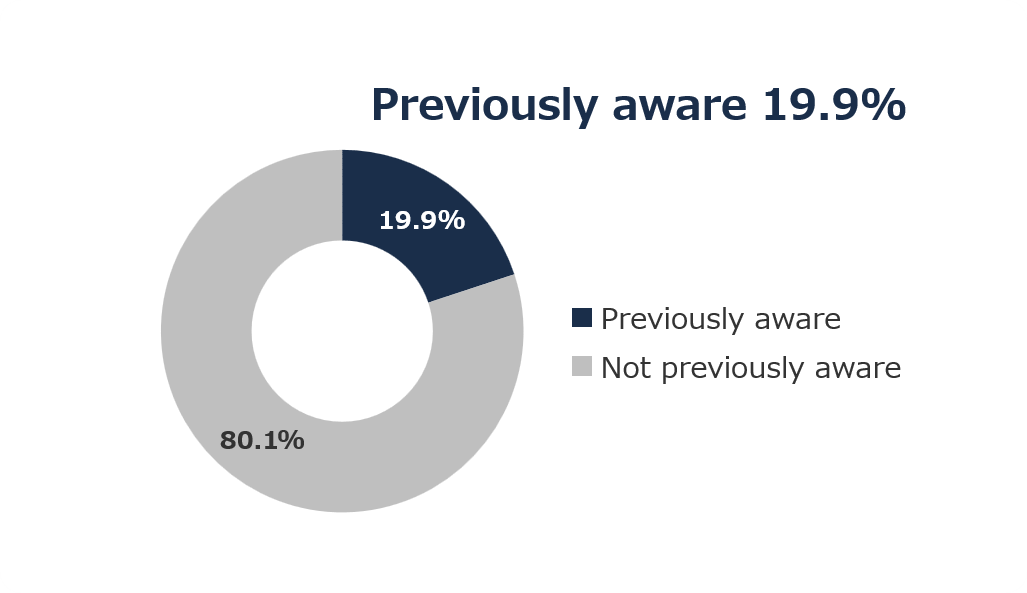
When asked whether they were aware that most male chicks in the laying hen industry are culled because they cannot be used for egg production, 19.9% of respondents answered that they were aware of the practice, while 80.1% said they had not previously known about it.
These findings indicate that, although consumers routinely purchase and consume eggs, the culling of male chicks during egg production is still not widely recognized by the general public.
[Chart: Awareness of Male Chick Culling]
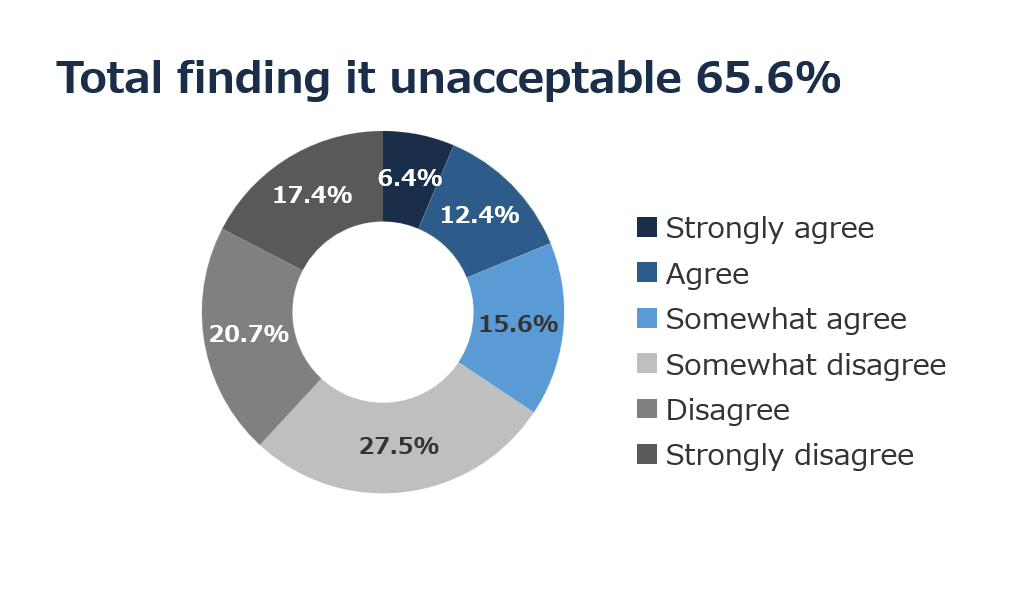
2. 65.6% Did Not Find Male Chick Culling Acceptable
Respondents were asked whether they considered it acceptable that newly hatched male chicks are culled so that only female chicks are raised for egg production. The combined proportion selecting “Strongly disagree,” “Disagree,” or “Somewhat disagree” was 65.6%.
Although awareness of male chick culling remains low, the findings suggest that many consumers hold negative views of the practice once they learn about it.
[Chart: Acceptance of Male Chick Culling]
Q. Do you find it acceptable that newly hatched male chicks are culled so that only female chicks are raised for egg production?
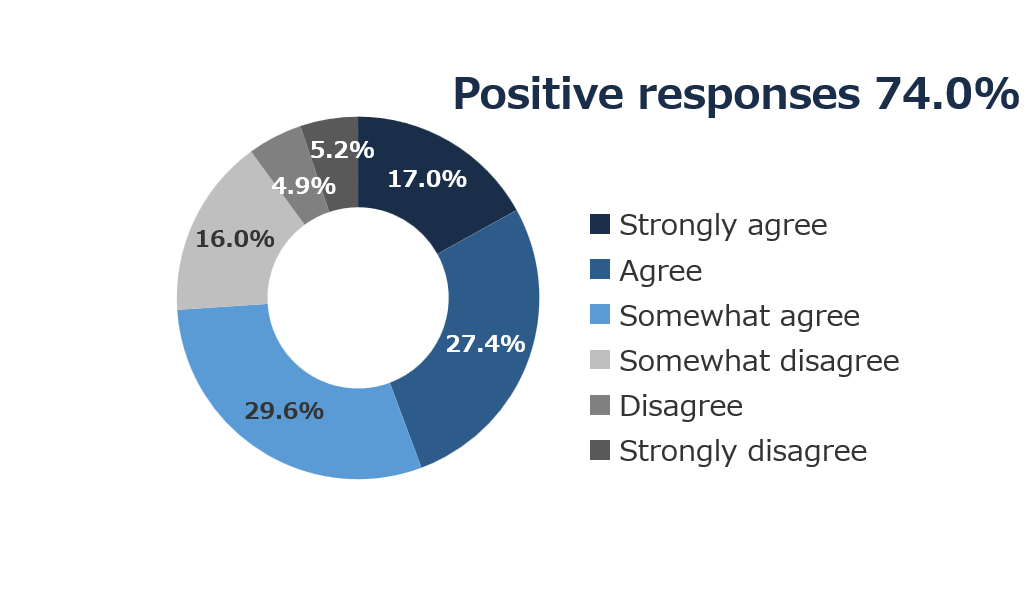
3. 74.0% Support the Adoption of In-Ovo Sexing
Respondents were asked whether in-ovo sexing should be adopted instead of culling male chicks after hatching. The combined proportion selecting “Strongly agree,” “Agree,” or “Somewhat agree” was 74.0%.
Although awareness of the technology itself remains limited, the findings indicate that many consumers support its adoption after receiving a brief explanation.
[Chart: Support for the Adoption of In-Ovo Sexing]
Q. Rather than culling male chicks after hatching, do you think in-ovo sexing should be adopted?
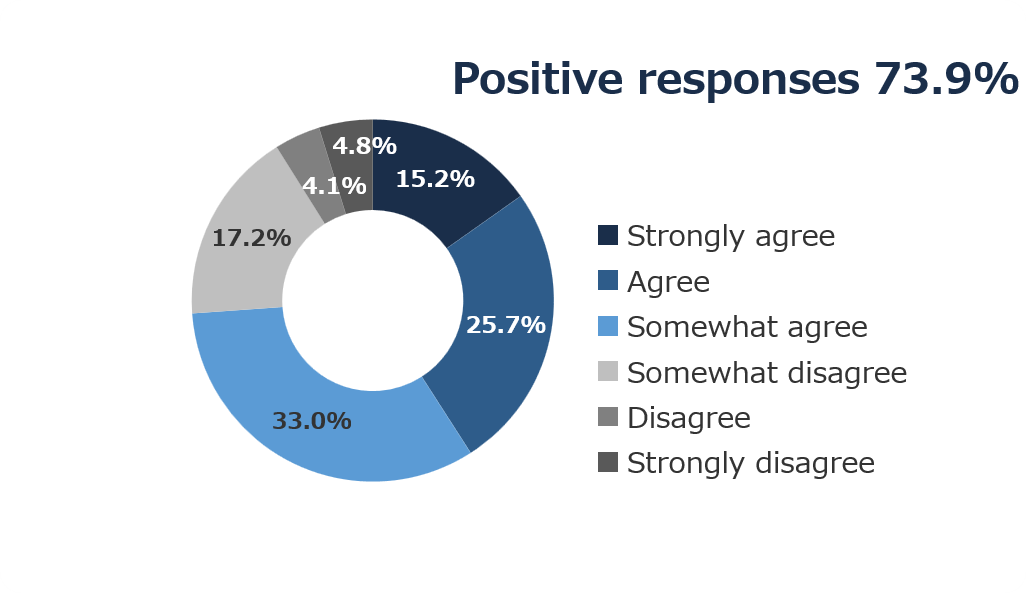
4. 73.9% Would Purchase Eggs Produced Without Male Chick Culling
Respondents were asked whether they would purchase eggs produced without male chick culling if they were available at the supermarket they normally use. The combined proportion expressing a positive purchase intention was 73.9%, indicating substantial latent consumer demand.
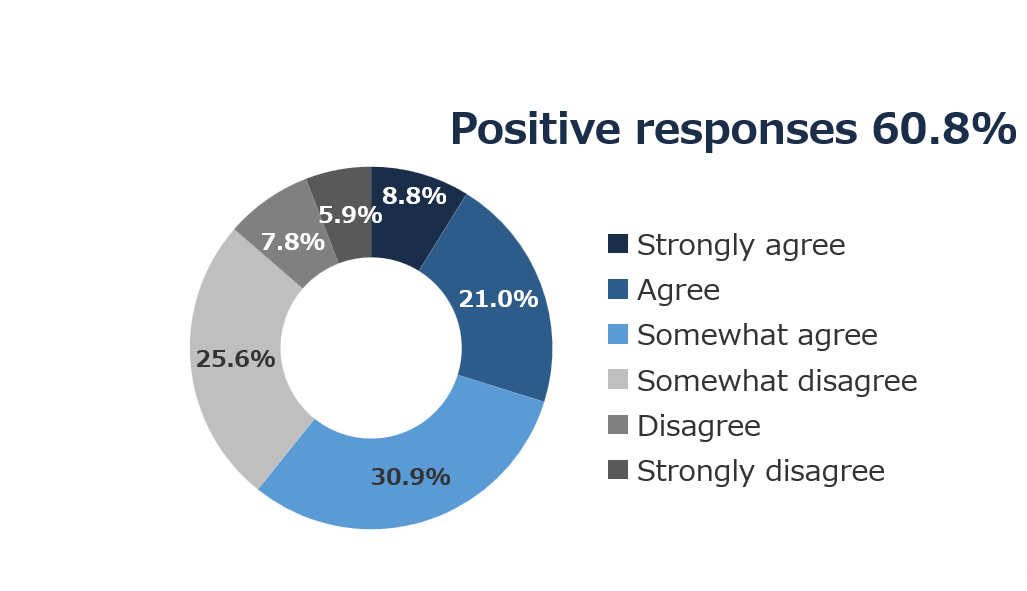
Respondents were also asked whether they would shop at a different supermarket if such eggs were unavailable at their usual store but were available elsewhere. 60.8% expressed a willingness to do so.
These findings suggest that the introduction of in-ovo sexing could influence not only consumers’ choice of eggs but also their choice of retailer.
[Chart: Purchase Intention]
Q. If eggs produced without culling male chicks were available at the supermarket you normally use, would you be willing to purchase them?
[Chart: Willingness to Shop at a Different Supermarket]
Q. If eggs produced using in-ovo sexing were not available at your usual supermarket but were available at another supermarket, would you be willing to shop at that supermarket instead?
5. Around 70% Are Willing to Pay a Premium
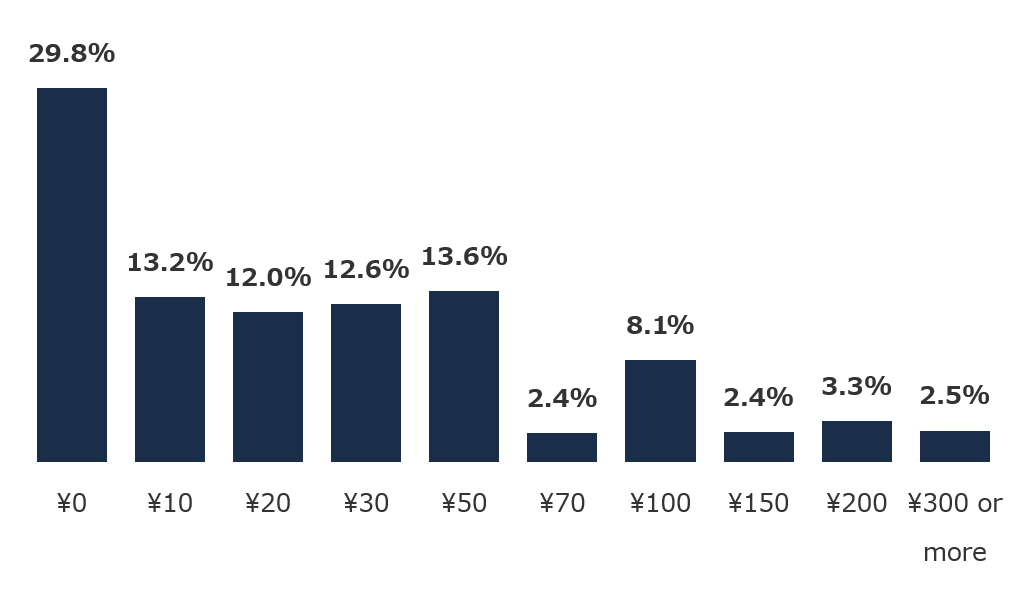
Respondents were asked how much extra they would be willing to pay for a pack of 10 eggs of the same quality and size as those they currently purchase if the eggs were produced without culling male chicks through the use of in-ovo sexing.
The results showed that 70.2% of respondents were willing to pay at least JPY 10 more per pack. The most frequently selected amount was JPY 50.
[Chart: Willingness to Pay an Additional Amount per Pack of 10 Eggs]
Q. Assuming that eggs produced using in-ovo sexing are equivalent in quality and size to the eggs you currently purchase, what is the maximum additional amount you would be willing to pay for a pack of ten eggs if male chicks were no longer culled?
6. Around 70% Support Legislation
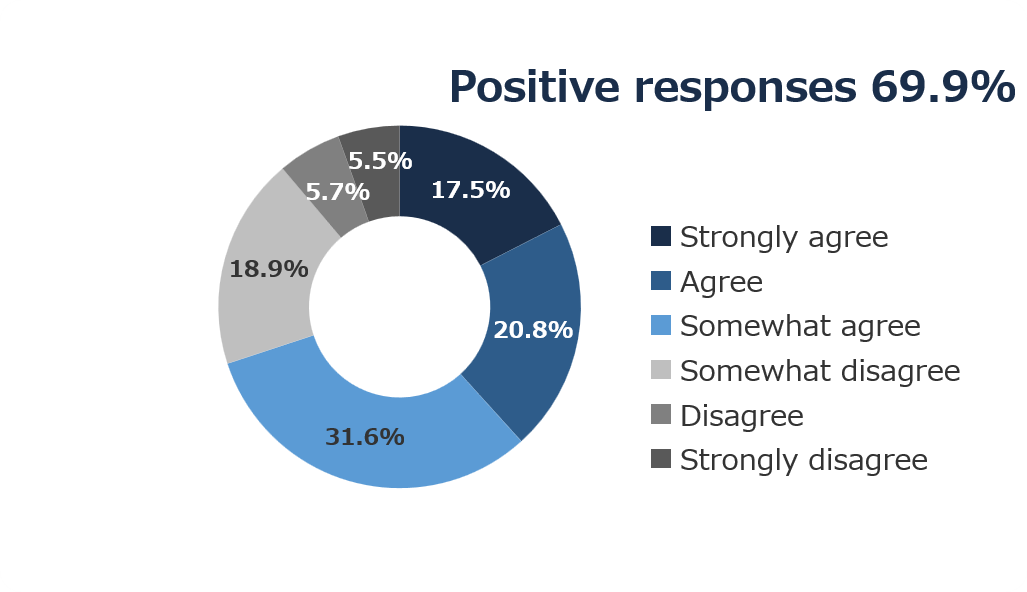
After being informed that some countries have already prohibited male chick culling by law, respondents were asked whether Japan should introduce similar legislation. The combined proportion expressing support was 69.9%.
The findings suggest that consumers expect not only market-driven change through purchasing decisions, but also institutional action by government and the egg industry.
[Chart: Support for Legislation in Japan]
Q. Some countries, including France, Germany, and Italy, have introduced legislation prohibiting the culling of male chicks. Do you think Japan should also introduce legislation to phase out this practice?
Comment from Animal Rights Center Japan
Although awareness of male chick culling and in-ovo sexing remains low, this survey found that, after learning about the issue and its technological alternative, approximately 70% of consumers expressed a willingness to purchase eggs produced without male chick culling.
In-ovo sexing has already been commercialized in several countries, particularly in Europe.
However, such eggs are not yet commercially available in Japan, leaving consumers with virtually no opportunity to choose eggs produced without male chick culling. We hope that hatcheries, egg producers, retailers, and government will work together to promote the adoption of in-ovo sexing and expand the availability of these eggs so that consumers in Japan can make this choice.
Animal Rights Center Japan will continue to promote the transition to egg production without male chick culling through research on technologies and policies in Japan and abroad, dialogue with hatcheries, producers, and related companies, and public awareness activities.
Survey Overview
- Survey title: Consumer Attitudes Toward Male Chick Culling and In-Ovo Sexing in Japan
- Method: Online survey
- Target population: Consumers in Japan
- Survey period: 1–3 July 2026
- Responses: 1,200
- Valid responses: 1,144
- Valid response rate: 95.3%
- Analysis: Responses were included in the analysis only if respondents correctly answered a data-quality screening question.
- Conducted by: Animal Rights Center Japan
- Research company: Marketing Applications Inc.
- Note: Percentages may not total exactly 100% because of rounding.
Full Survey Report
The full survey report, including results for all survey questions, respondent demographics, and selected cross-tabulation analyses, is available below. If you are interested in additional cross-tabulations or further analyses not included in the report, please feel free to contact us.
📄 Read the Full Survey Report (PDF)
Consumer Attitudes Toward Male Chick Culling and In-Ovo Sexing in Japan
(PDF, 27 pages)
About Animal Rights Center Japan
Animal Rights Center Japan is a Japanese non-profit organization dedicated to improving animal welfare and advancing animal rights. We work to expose the realities faced by animals and promote better welfare standards and ethical consumption.
Our activities focus primarily on farmed animals raised for food, aquatic animals used in aquaculture, and animals exploited for fur and other clothing materials.
Contact
Animal Rights Center Japan
Contact Us
Help End Male Chick Culling in Japan
Animal Rights Center Japan is campaigning to end male chick culling in Japan.
We invite you to support our petition and help bring about change.